
Level 1 sweep and inspection to the NFPA 211 annual standard - flue, crown, cap, and flashing checked and photographed
Chimney sweep logs do not sweep chimneys. They loosen some creosote - which then falls where a brush and vacuum still have to collect it.
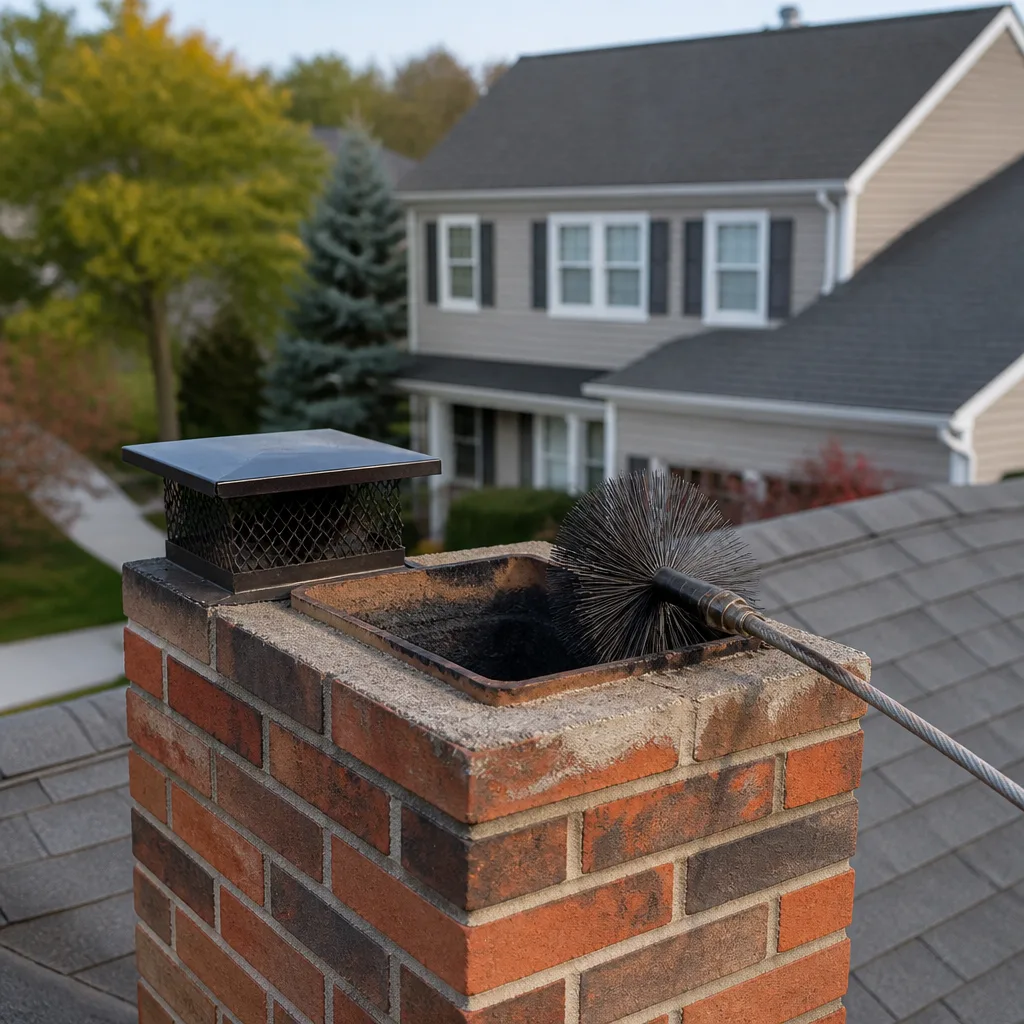
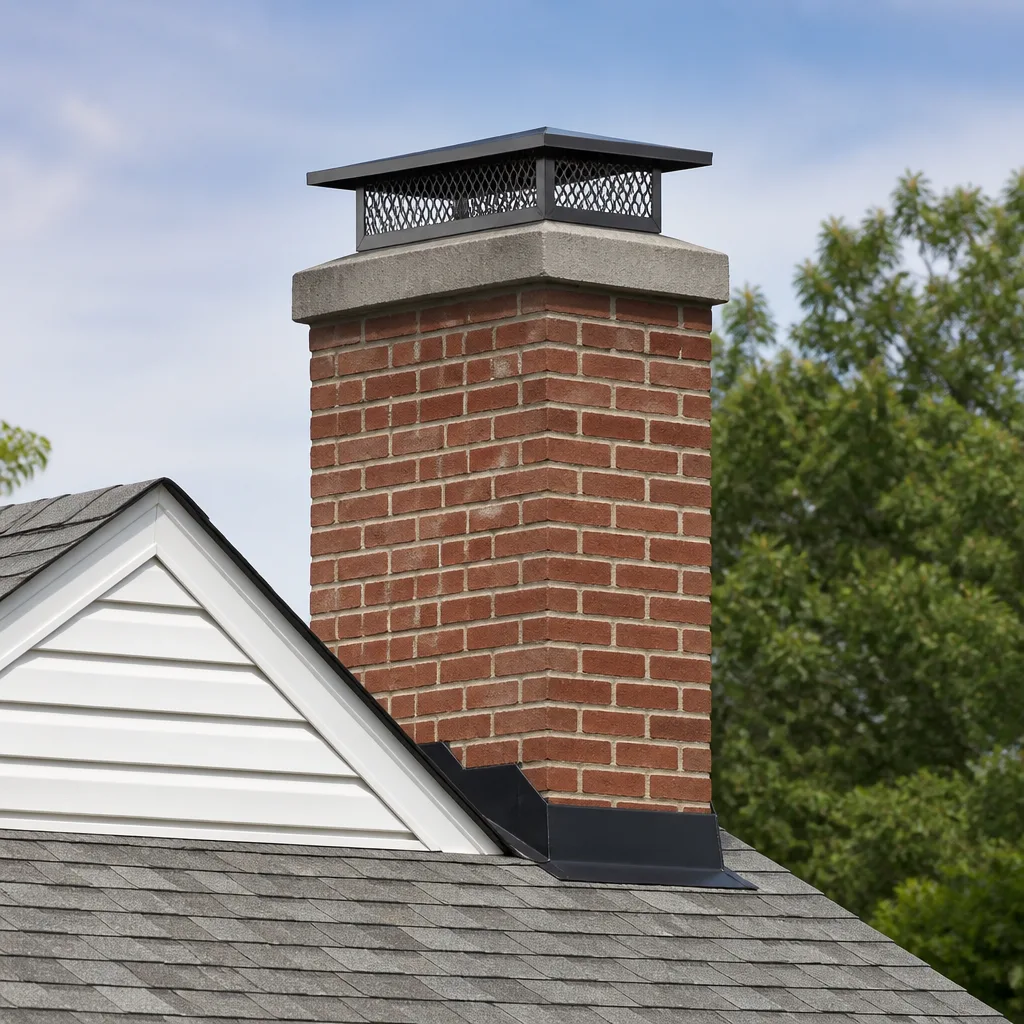
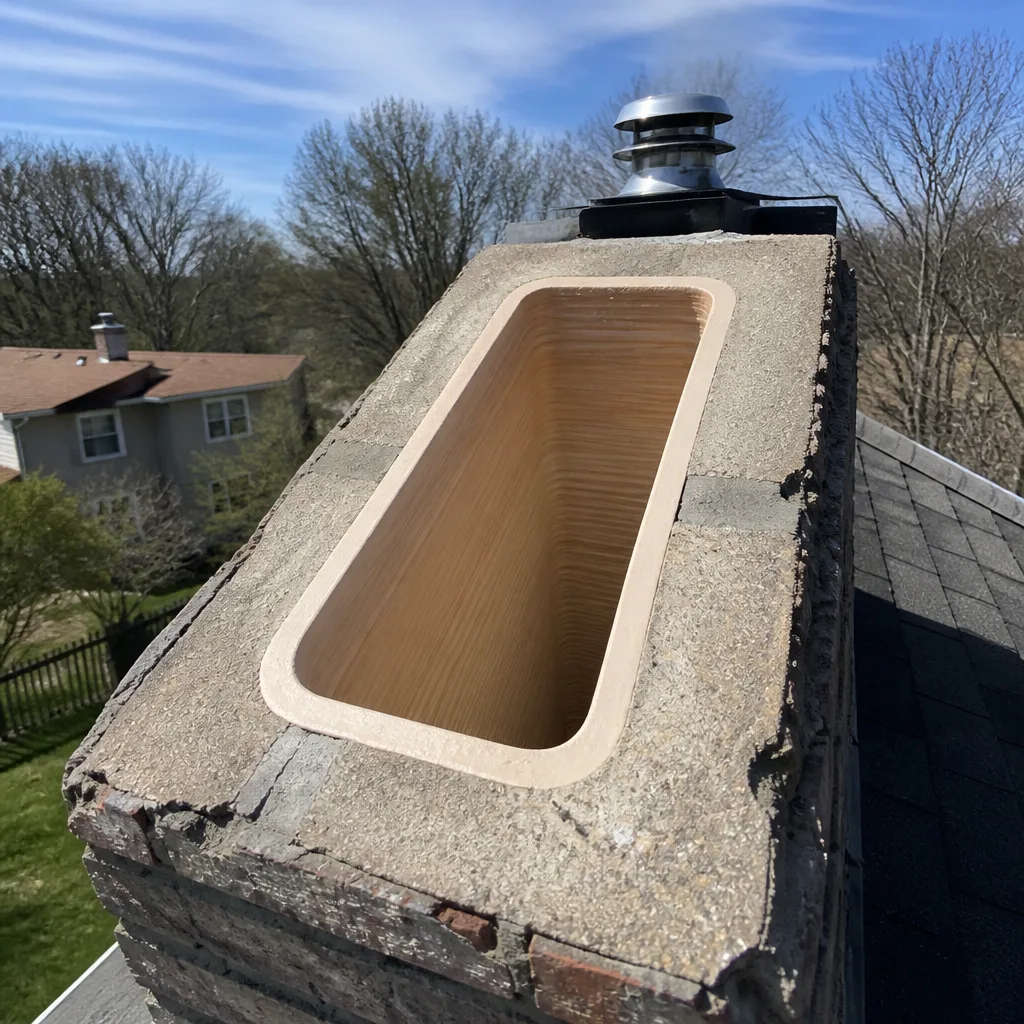
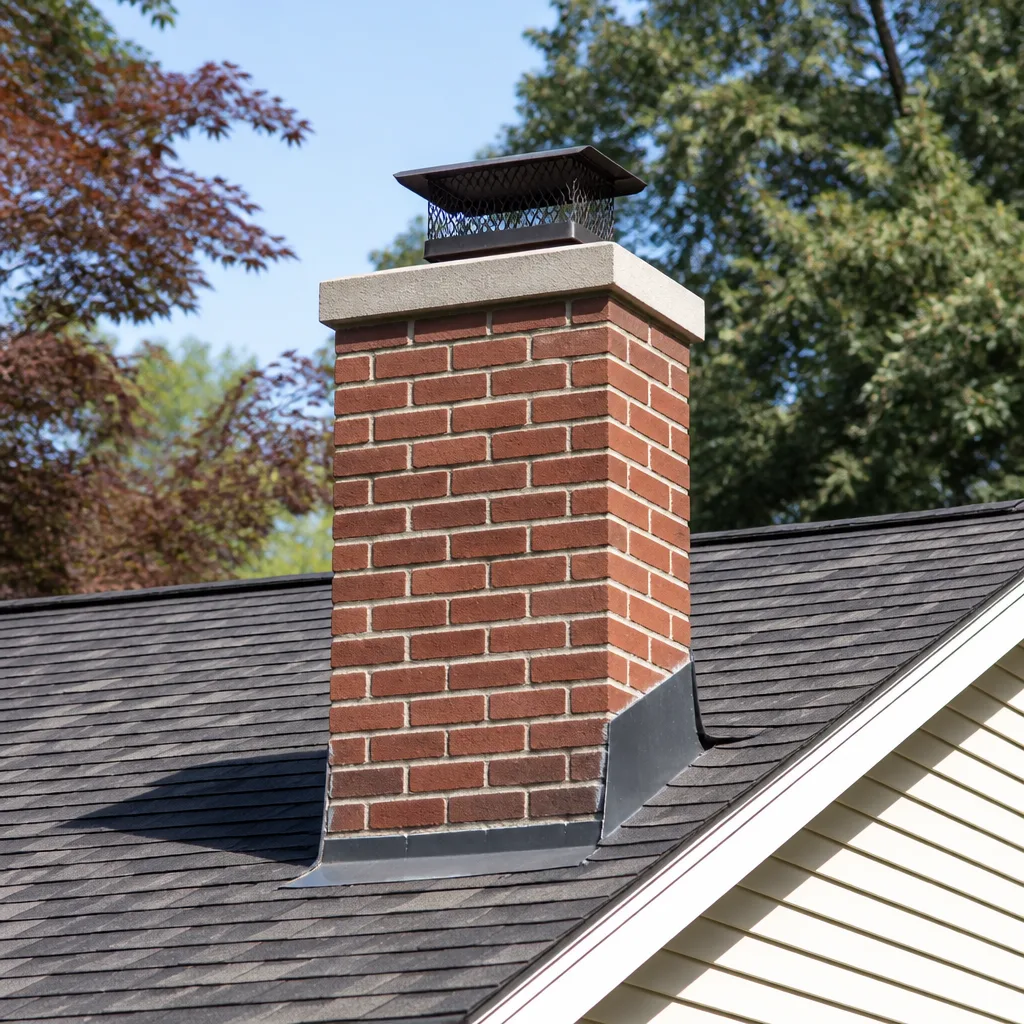
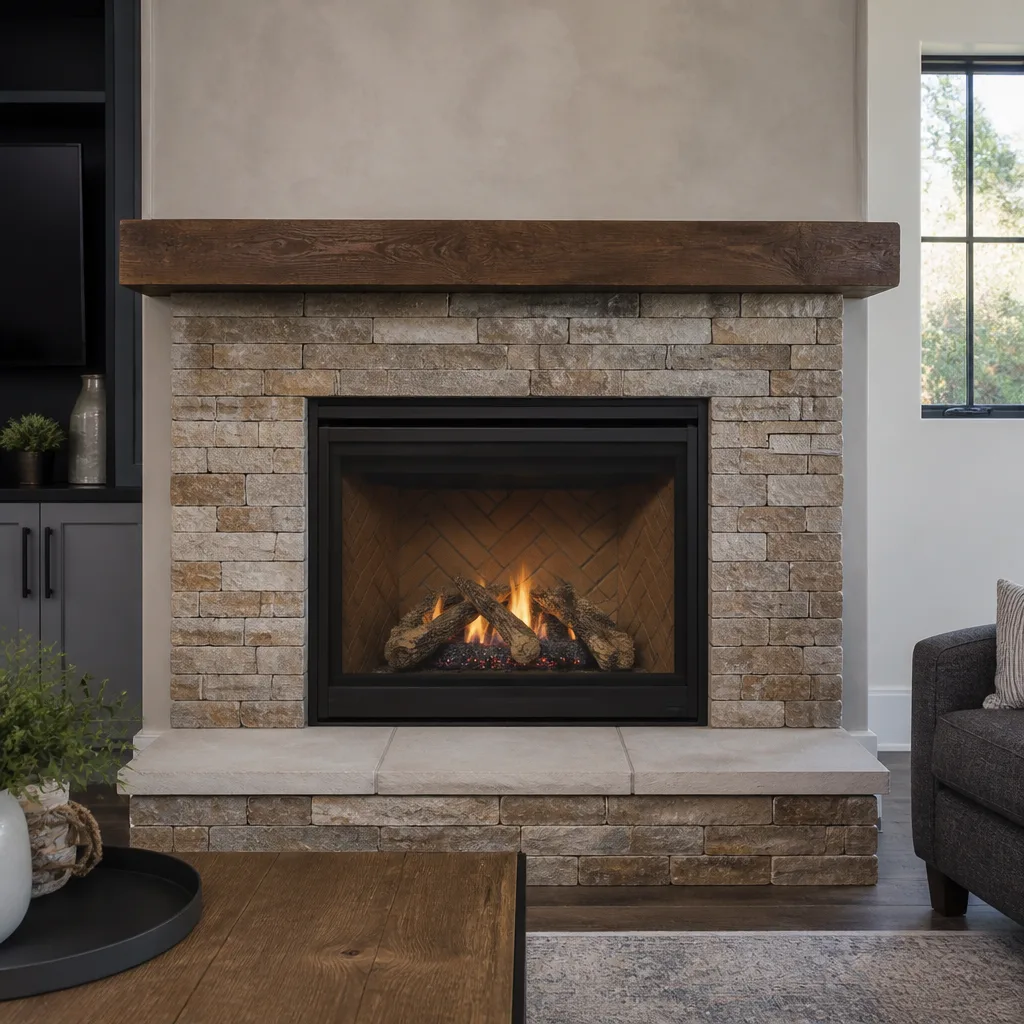
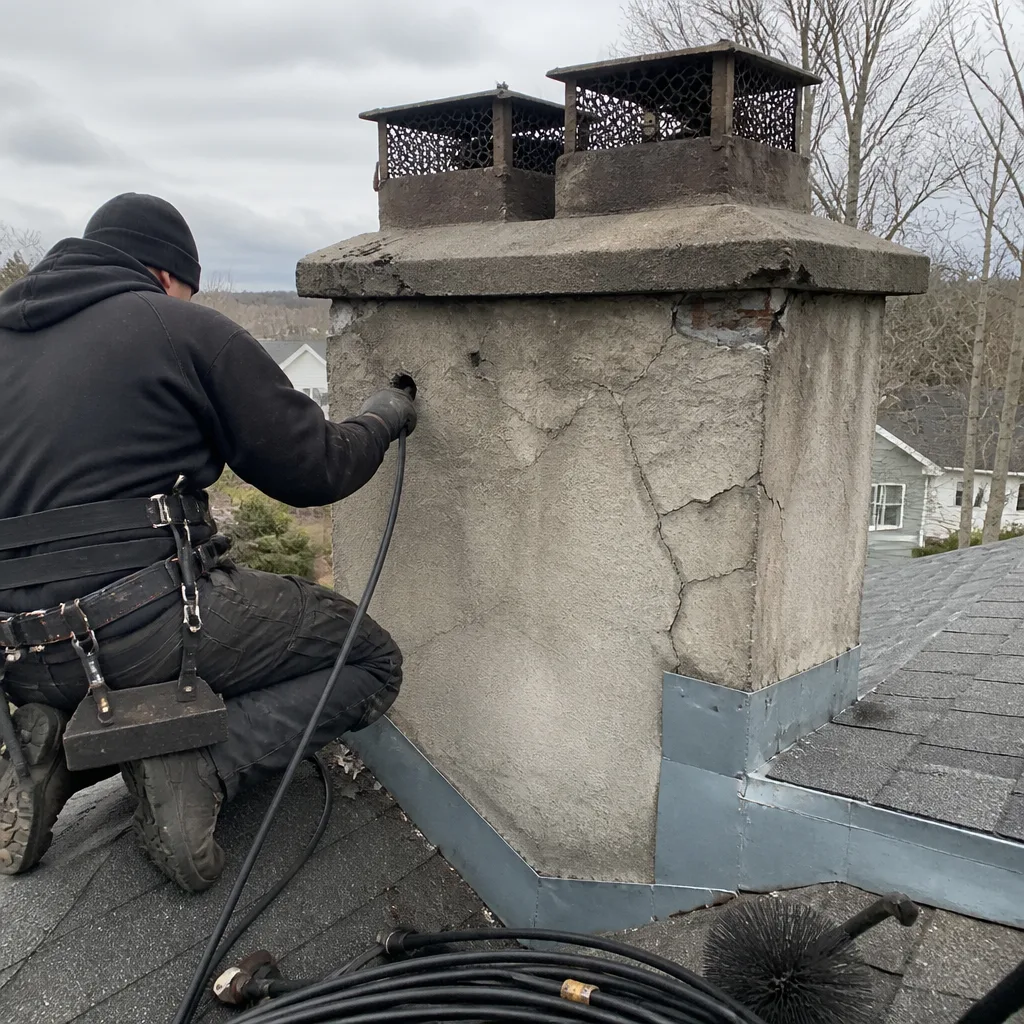 Before
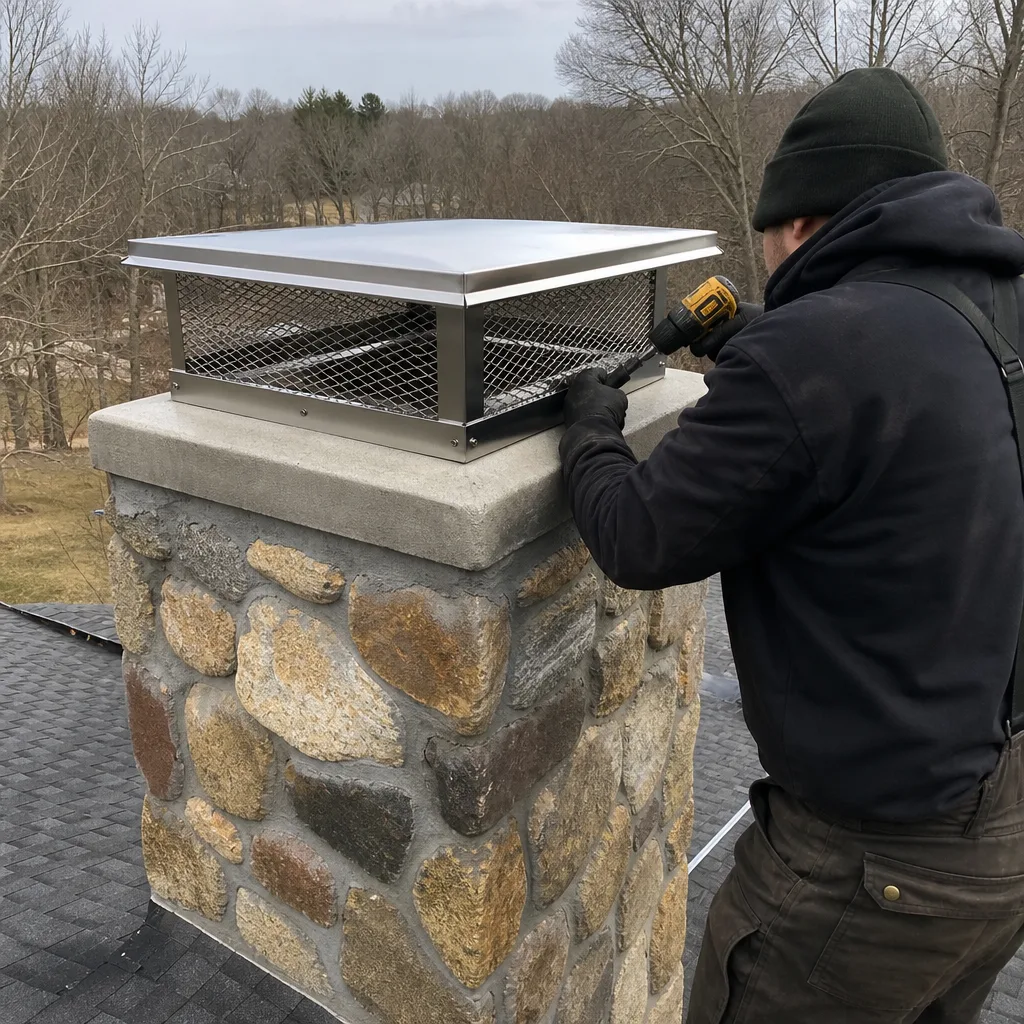 After
After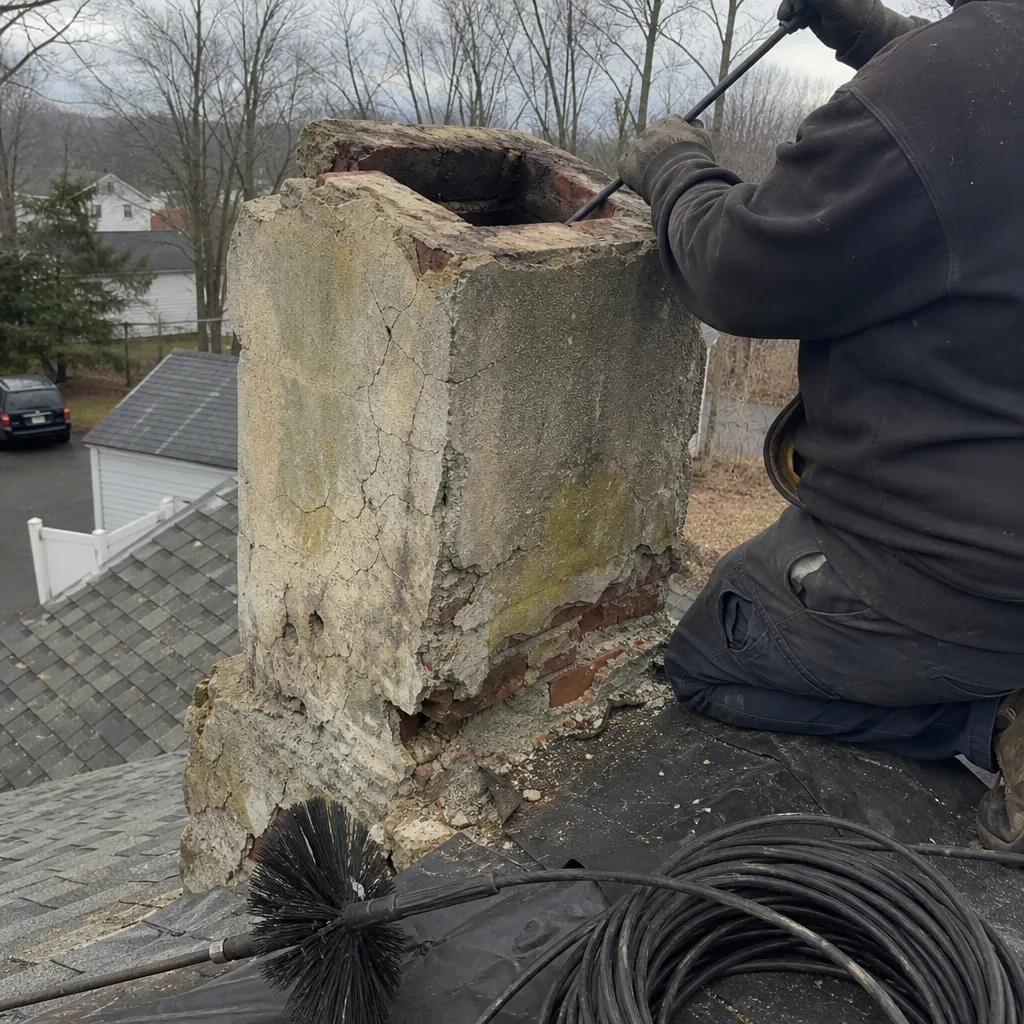 Before
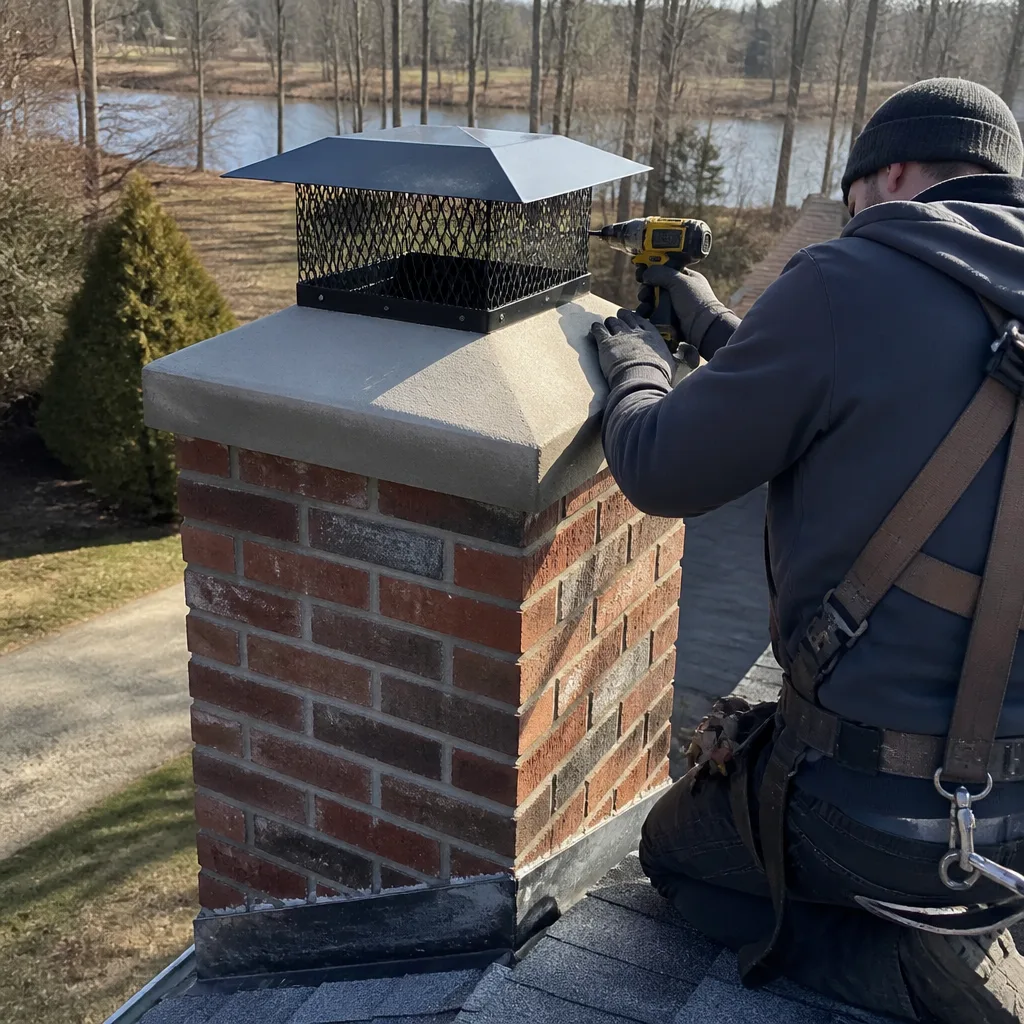 After
After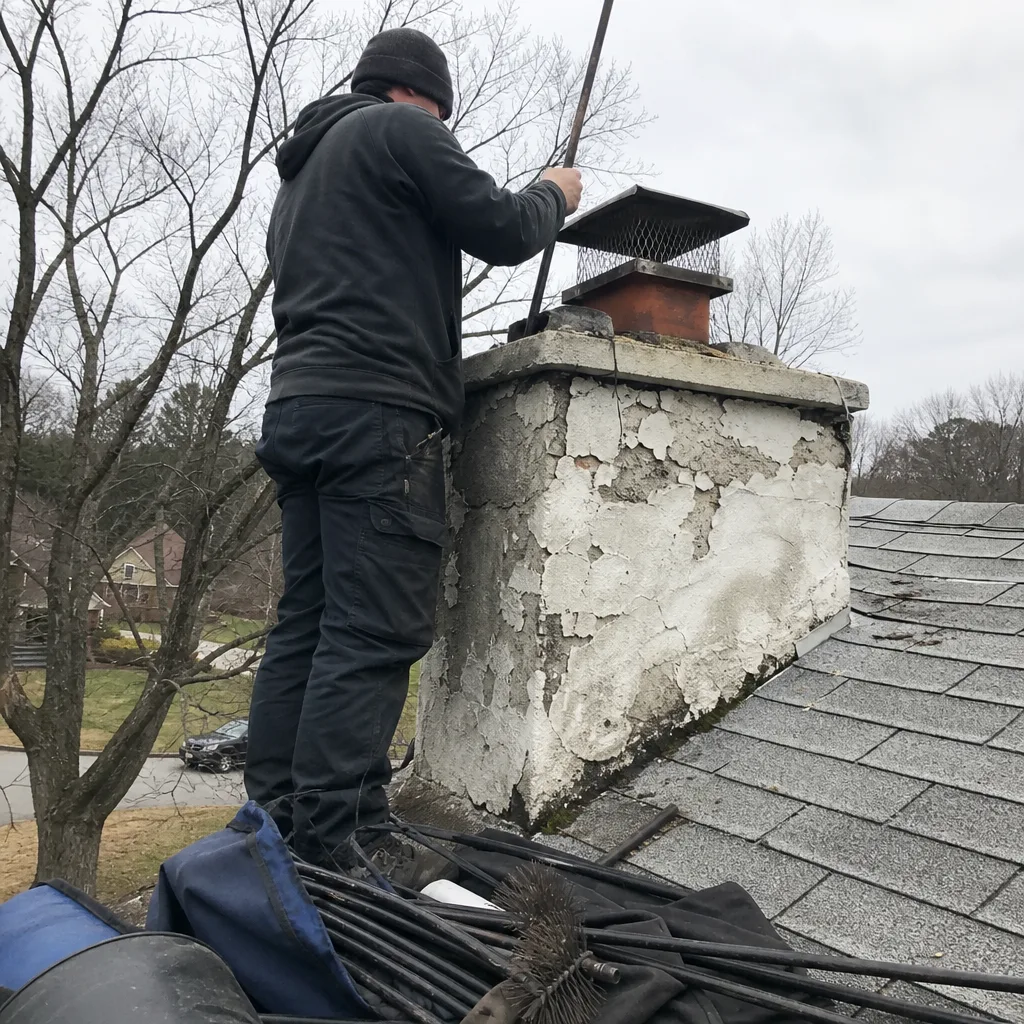 Before
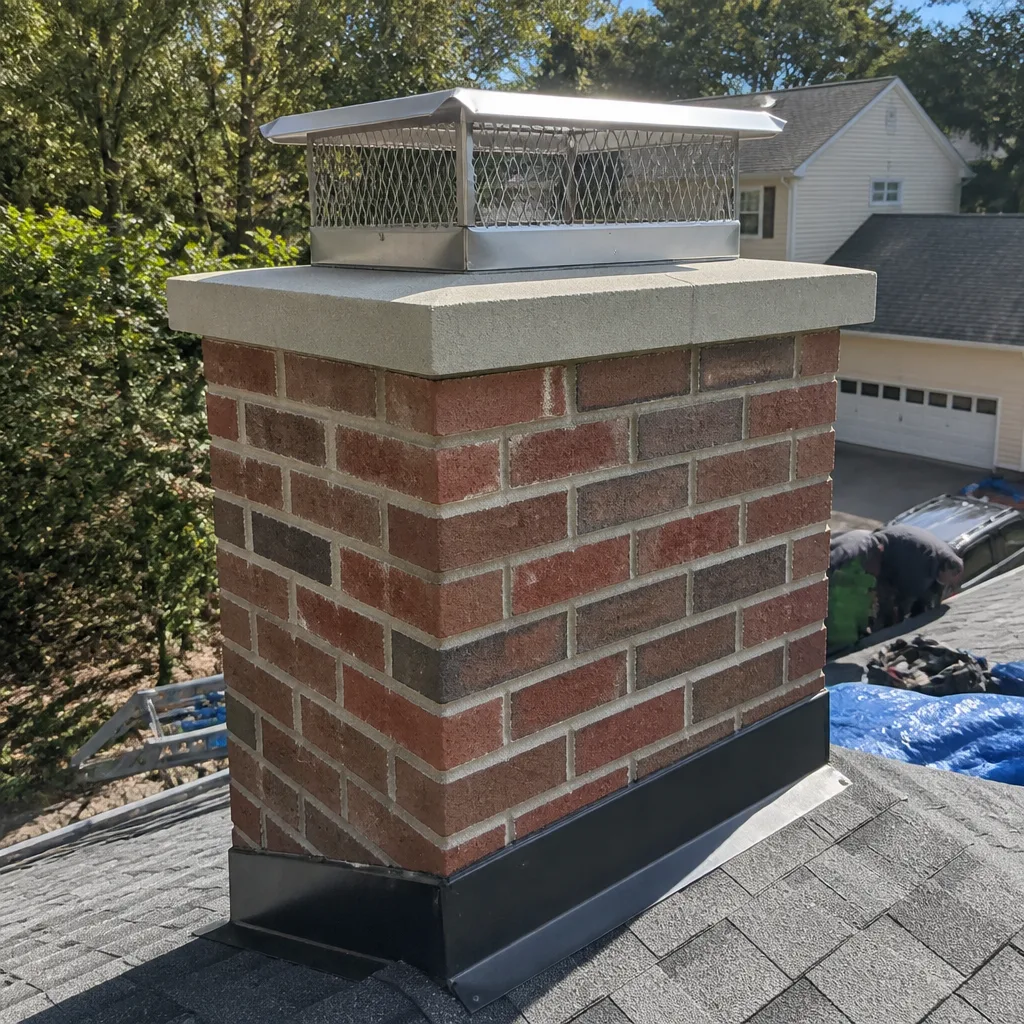 After
AfterCreosote Removal in Waterford, CT
Creosote removal in Waterford typically runs between $150 and $600 depending on how much has built up and what degree of buildup we’re dealing with. Most single-flue homes with stage-one or stage-two creosote can be cleared in one visit, same day. If you’re smelling something sharp and tarry near your fireplace, or you haven’t had the flue looked at in a couple of years, that’s reason enough to call for Chimney Cleaning & Sweep services.
We’re Top Hat Chimney, and Wendell Pike has been crawling into flues across New London County since 1999. This isn’t a franchise that arrived last spring. Wendell grew up in this part of Connecticut, knows how the cold comes off Long Island Sound in late October, and has seen firsthand what three cords of green oak does to a liner over a couple of winters. When you call (860) 390-4899, a live person picks up – around the clock – and you get an upfront price before a single brush touches your flue. Our Chimney Cleaning & Sweep in Waterford work covers the full picture, and creosote removal is the piece of it that genuinely cannot wait.
Every job we complete is backed by the 90-Day Done Right Promise: if it isn’t right, one call brings us back at no additional cost. That’s in writing, on every invoice, no exceptions.
What Creosote Actually Is – and Why Waterford Homes Get It Fast
When wood burns, it releases smoke, water vapor, gases, and unburned carbon particles. As that mix rises into a cooler flue, some of it condenses on the liner walls. That condensation is creosote. It starts as a flaky, light-brown dust. Leave it alone, or burn wet wood, and it thickens into a sticky tar. Keep going, and it hardens into a shiny black glaze that bonds to the liner like epoxy.
Waterford sits close enough to the shoreline that overnight temperatures in November and December drop fast, especially out toward Oswegatchie Hills and along the Route 156 corridor. A cold flue is a creosote factory. You light a fire in a fireplace that sat unused since March, the liner is 45 degrees, and the first hour of burning deposits a thin varnish on every tile. Do that forty or fifty times over a heating season, and you’ve got a real accumulation problem before February.
There are three stages, and the distance between stage one and stage three is mostly time and wood quality:
- Stage One (first-degree): Loose, flaky, dusty buildup. A firm wire brush clears it. This is what a routine annual cleaning handles.
- Stage Two (second-degree): Tar-like, porous, sometimes crunchy. A rotary power brush or chemical treatment is usually needed. Still manageable in one visit for most Waterford homes.
- Stage Three (third-degree): A hard, shiny glaze fused to the liner. This is the stage that ignites easily and burns at temperatures that can crack a clay tile liner or breach a masonry flue. Chemical sprays are applied to soften it before mechanical removal. In severe cases, the liner itself needs replacing.
First-degree creosote is a brush job. Third-degree is a glaze – catch it early and you’re talking a couple hundred dollars, not a liner replacement that runs into the thousands.
When You Need Creosote Removal
- You smell a sharp, oily, or tarry odor near the firebox. Creosote smell intensifies on humid days. If your living room smells like a campfire even when you haven’t lit a fire in weeks, the deposit is off-gassing through small cracks or the damper. That’s a stage-two or three situation and worth addressing before the next fire.
- It’s been more than twelve months since your last sweep. Once a year, burn or no burn. Chimneys degrade in the off-season too, and annual inspection is the only way to catch buildup before it crosses from manageable to serious. Waterford’s damp coastal winters accelerate the process.
- You burn a lot of wood, especially cord wood from local suppliers. Freshly split wood from the Colchester or East Haddam area often has higher moisture content than kiln-dried logs. Wet wood means incomplete combustion, which means heavy creosote deposits. If you’re burning two cords or more per season, consider a mid-season check.
- Your fireplace smokes back into the room. Excessive creosote narrows the flue opening, which disrupts draft. If smoke rolls out toward you instead of heading up, the flue may be partially blocked – creosote is a common culprit, though not the only one.
- You hear or see evidence of a chimney fire. A loud cracking or roaring sound you didn’t expect, a puff of smoke or sparks from the chimney top, or a fire that seemed to burn hotter than the wood warranted – any of these warrant an immediate inspection. Creosote fires can look small from the outside while doing significant damage inside the liner.
- You’re buying a home in Waterford with an existing fireplace or stove. Never assume the previous owner swept. A camera inspection and cleaning before the first fire protects your investment and your family. Wendell has seen brand-new homeowners on Rope Ferry Road and out near Millstone discover stage-three buildup from the seller’s last decade of weekend fires.
Our Creosote Removal Process
- Phone quote and scheduling. When you call (860) 390-4899, we ask a few plain questions – type of appliance, approximate last service date, what symptoms you’re noticing. From that, we give you an honest price range before the appointment is even booked. No trip charge for calls inside the county.
- Visual inspection and camera scan. The sweep who shows up – often Wendell himself on Waterford runs – starts with a Level 1 or Level 2 inspection depending on what the initial look reveals. A camera goes up the flue. You see the footage, and you get a plain-English verdict: here’s what we found, here’s what it means, here’s what we recommend. No upsell language, just the facts.
- Mechanical removal. For stage-one and most stage-two deposits, rotary power brushes break the material loose. The firebox is sealed with a drop cloth before we begin, so your living room stays clean. Dust and debris fall into the firebox and are vacuumed out completely before we leave.
- Chemical treatment for advanced buildup. Stage-two deposits that have hardened, and all stage-three glazed creosote, get a Copperfield-approved chemical treatment applied to the liner walls. The agent breaks down the molecular bond between the glaze and the liner material. We schedule a follow-up removal once it has had time to work – typically a few days to a week. We don’t pretend chemical treatment alone removes the material; the follow-up mechanical pass does that.
- Post-removal inspection and liner check. Once the buildup is cleared, the camera goes back up. We’re looking for liner cracks, joint separations, or spalling tile that the creosote may have been masking. If a HeatShield resurfacing or DuraFlex liner replacement is needed, we tell you straight – with the cost, before we touch anything.
- Written summary and 90-Day Promise. Before Wendell or his crew leaves your driveway, you have a written record of what was found, what was done, and what – if anything – needs attention in the future. The 90-Day Done Right Promise is stamped on every invoice. If something isn’t right within that window, one call brings us back.
Creosote Removal Pricing in Waterford
Creosote removal in Waterford costs between $150 and $600 for the large majority of residential jobs. Here’s what drives the number:
| Situation | Typical Range |
|---|---|
| Stage-one (light, flaky) – single flue | $150 – $250 |
| Stage-two (tar-like, moderate buildup) | $250 – $400 |
| Stage-three (glazed, chemical + mechanical) | $400 – $600+ |
| Follow-up visit after chemical treatment | $100 – $200 |
| Liner inspection added to cleaning | $75 – $150 |
A few things worth knowing: any repair that comes out of the inspection and runs over $200 gets $40 off automatically. Seniors and veterans always get 10% off every service, no paperwork required – just mention it when you call. And if you have a written estimate from another company, we’ll give you a free second opinion on it. No obligation, no pressure.
Upfront pricing is not a talking point here; it’s a firm rule. The number you hear on the phone is the number on the invoice. Wendell built this business on that principle, and he’s been running on it since 1999.
Call (860) 390-4899 for a free estimate. It takes about three minutes on the phone, and you’ll have a number before you hang up.
A Note on Safety – Why This Isn’t a DIY Job
We get asked occasionally whether a homeowner can handle creosote removal with a hardware-store brush and a shop vac. For stage-one dust, a chimney brush on a fiberglass rod can get some of it – but it rarely gets all of it, and it doesn’t include the Level 1 Inspection that tells you what stage you’re actually dealing with. More to the point, stage-two and stage-three creosote require rotary power equipment and chemical treatments that aren’t sold at a big-box store, and working inside a flue without the right containment dumps fine carbon particulate into your home.
The more serious concern is that a homeowner removing creosote has no way to simultaneously inspect the liner condition behind it. Cracked tile or a separated joint that was masked by the buildup becomes a fire pathway once the material is cleared. The Level 2 Inspection is the point, not just the cleaning. That’s why we put the camera up both before and after.
This is a job for someone who has done it a few thousand times. Wendell and his crew have.
FAQs – Creosote Removal in Waterford, CT
How much does creosote removal cost in Waterford?
Creosote removal in Waterford runs $150 to $600 for most homes, depending on the degree of buildup and the number of flues. Stage-one deposits are on the lower end; stage-three glazed creosote that requires chemical treatment and a follow-up mechanical pass is on the higher end. We give you an exact number before any work begins – call (860) 390-4899 for a free estimate.
How often should I have my chimney’s creosote removed?
Once a year is the standard, regardless of how often you burn. The National Fire Protection Association’s NFPA 211 standard calls for annual inspection and cleaning as needed – and in Waterford’s climate, “as needed” almost always means annually for anyone burning wood regularly. If you’re burning two cords or more per season, a mid-season check in January isn’t a bad idea.
Can creosote removal be done the same day?
Stage-one and most stage-two removals are completed in a single visit, typically in one to two hours. Stage-three glazed creosote requires a chemical treatment application followed by a return visit a few days later for the mechanical removal – so plan for two appointments in that case. We’ll tell you which situation you’re in after the first camera scan. Call us at (860) 390-4899 to get on the schedule.
What happens if creosote is left untreated?
Left untreated, creosote buildup reaches a point where a single hot fire can ignite it inside the flue. Chimney fires burn at temperatures that can exceed 2,000 degrees Fahrenheit – hot enough to crack clay tile liners, warp steel, and in some cases, ignite adjacent framing. In Waterford, Wendell has inspected homes after chimney fires where the visible damage inside the house was minor but the liner had failed completely. The structural repair cost dwarfed what a seasonal cleaning would have cost by a factor of ten or more. Catch it early.
Key Takeaways
- Creosote builds in three stages – first-degree is a brush job, third-degree is a glaze that needs chemical treatment and is a fire hazard.
- Waterford’s coastal climate means cold flues and fast condensation; annual cleaning is not optional for regular wood burners.
- Most single-flue homes can be cleared in one visit for $150 to $400, depending on buildup stage.
- Wendell and his crew have served New London County since 1999 – this is not a rotating franchise crew.
- Every job carries the 90-Day Done Right Promise in writing.
- Seniors and veterans get 10% off. Any repair over $200 gets $40 off. No trip charge inside the county.
- Call (860) 390-4899 – a live person answers, day or night.
Schedule Your Creosote Removal in Waterford
If you’ve got questions or you’re ready to book, call (860) 390-4899. A live person answers – no voicemail, no call center, no waiting until Monday. We’ll ask a few quick questions, give you a price range on the spot, and get you on the calendar. Free estimates, upfront pricing, and the 90-Day Done Right Promise on every job. Wendell Pike has been doing this work in Waterford and across New London County since 1999, and you’ll find him here on Saturday if anything ever needs a second look.
Written by Wendell Pike, Owner at Top Hat Chimney, serving Waterford since 1999.