
Last updated September 10, 2026
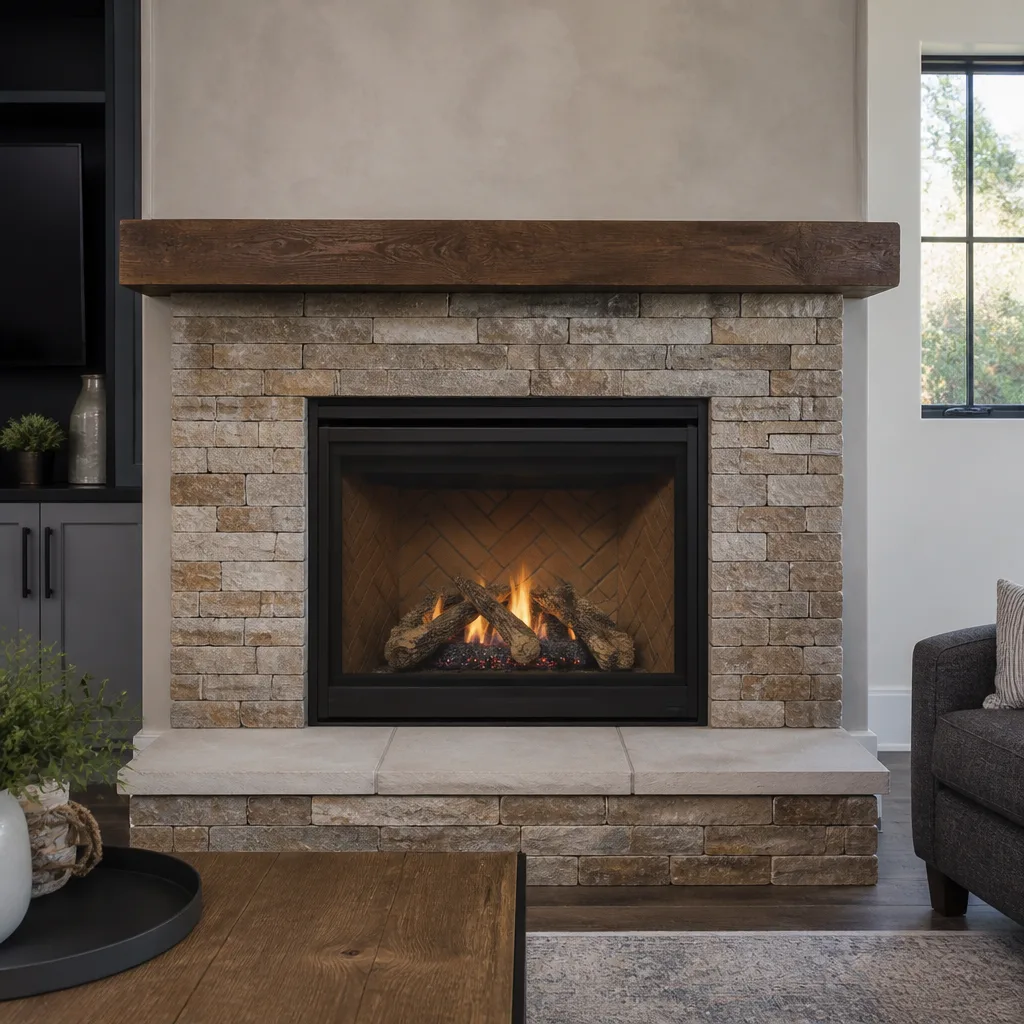
Level 1 sweep and inspection to the NFPA 211 annual standard - flue, crown, cap, and flashing checked and photographed
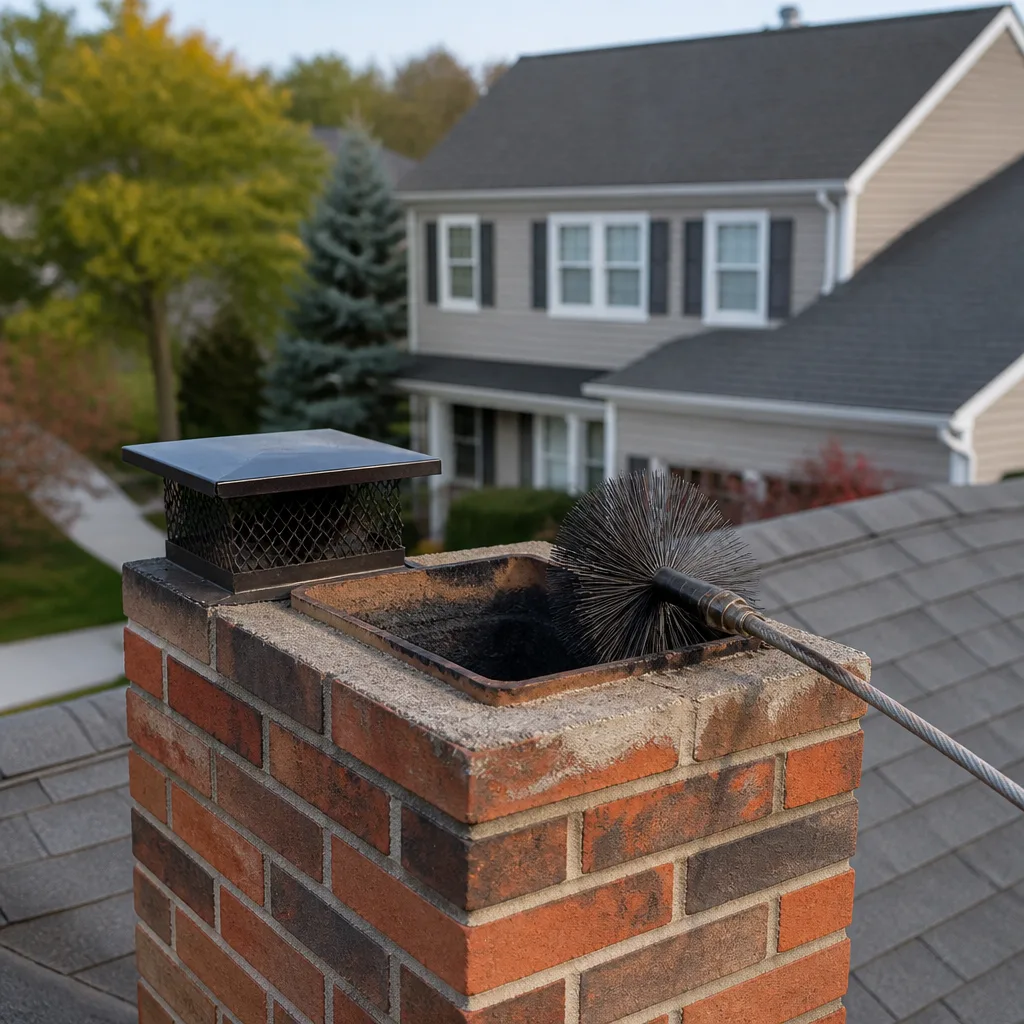
Chimney sweep logs do not sweep chimneys. They loosen some creosote - which then falls where a brush and vacuum still have to collect it.
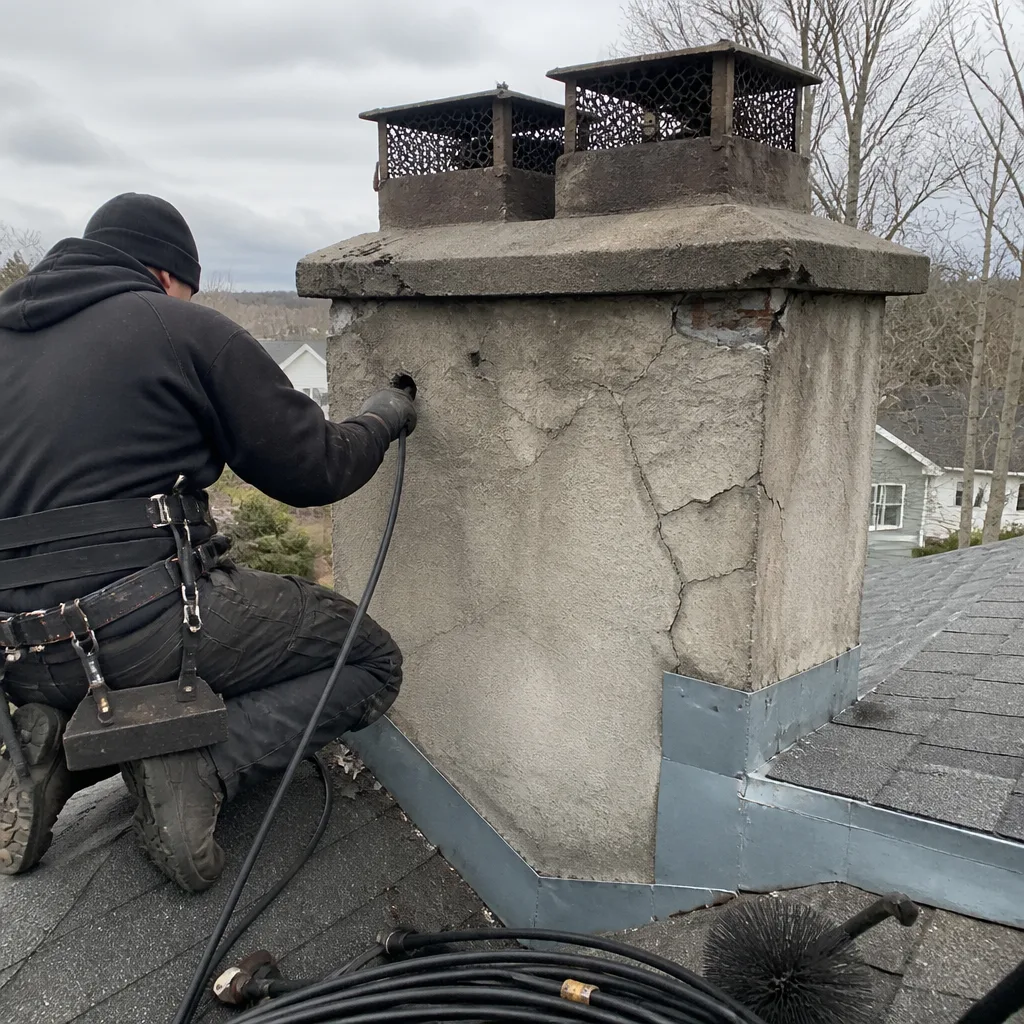 Before
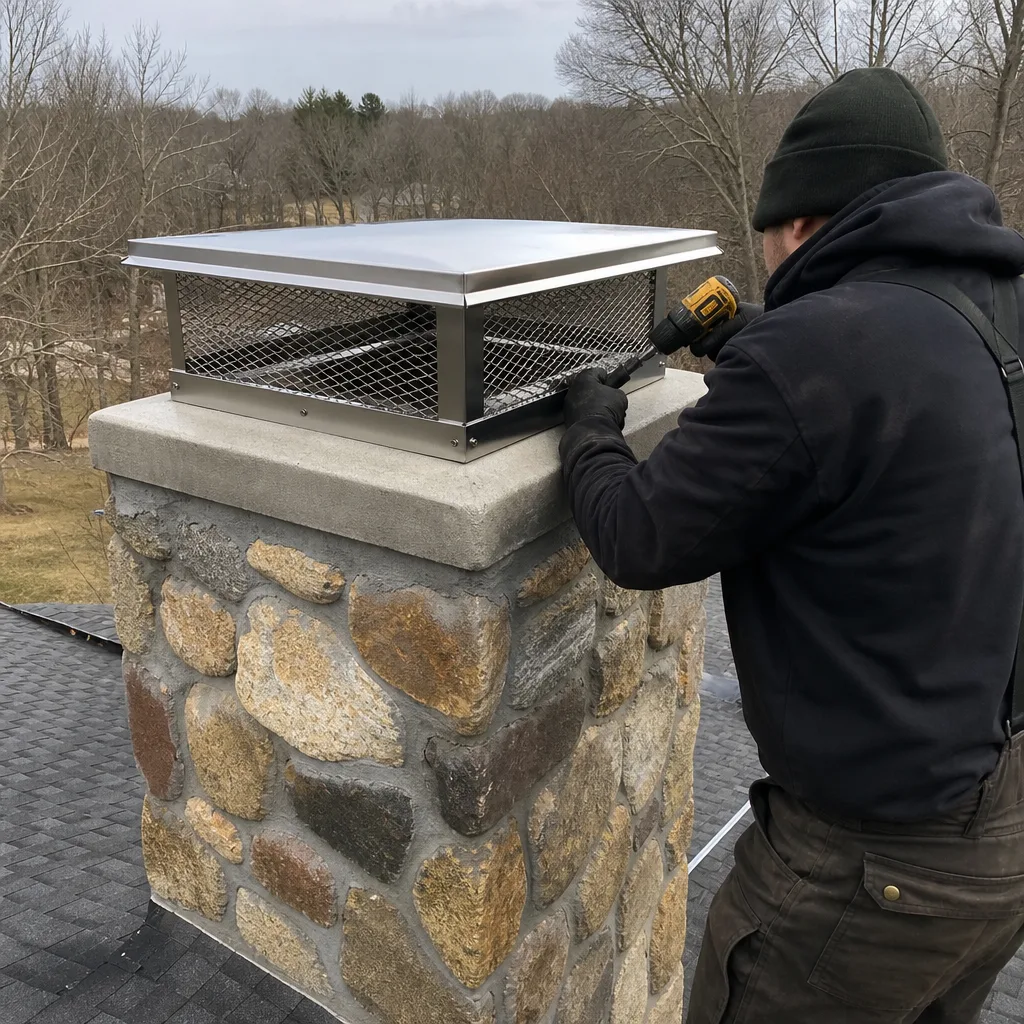 After
After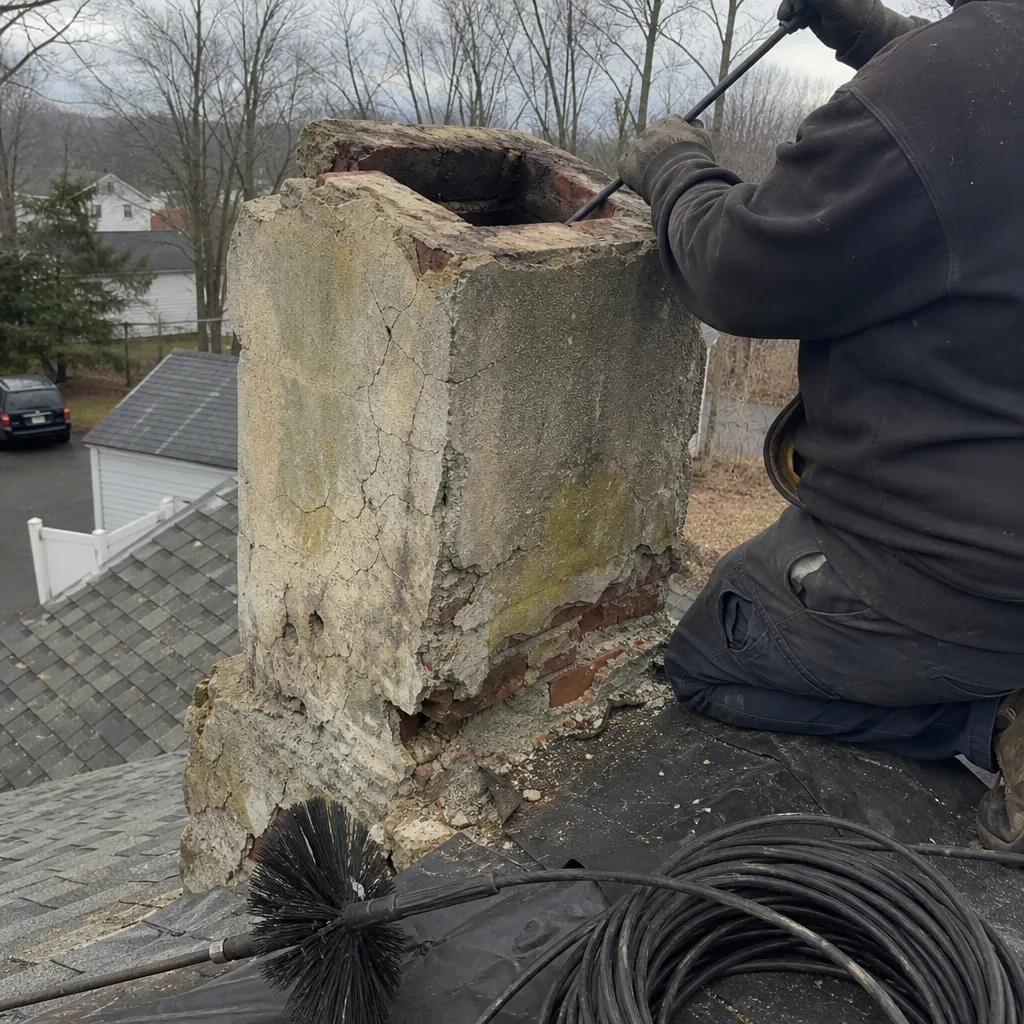 Before
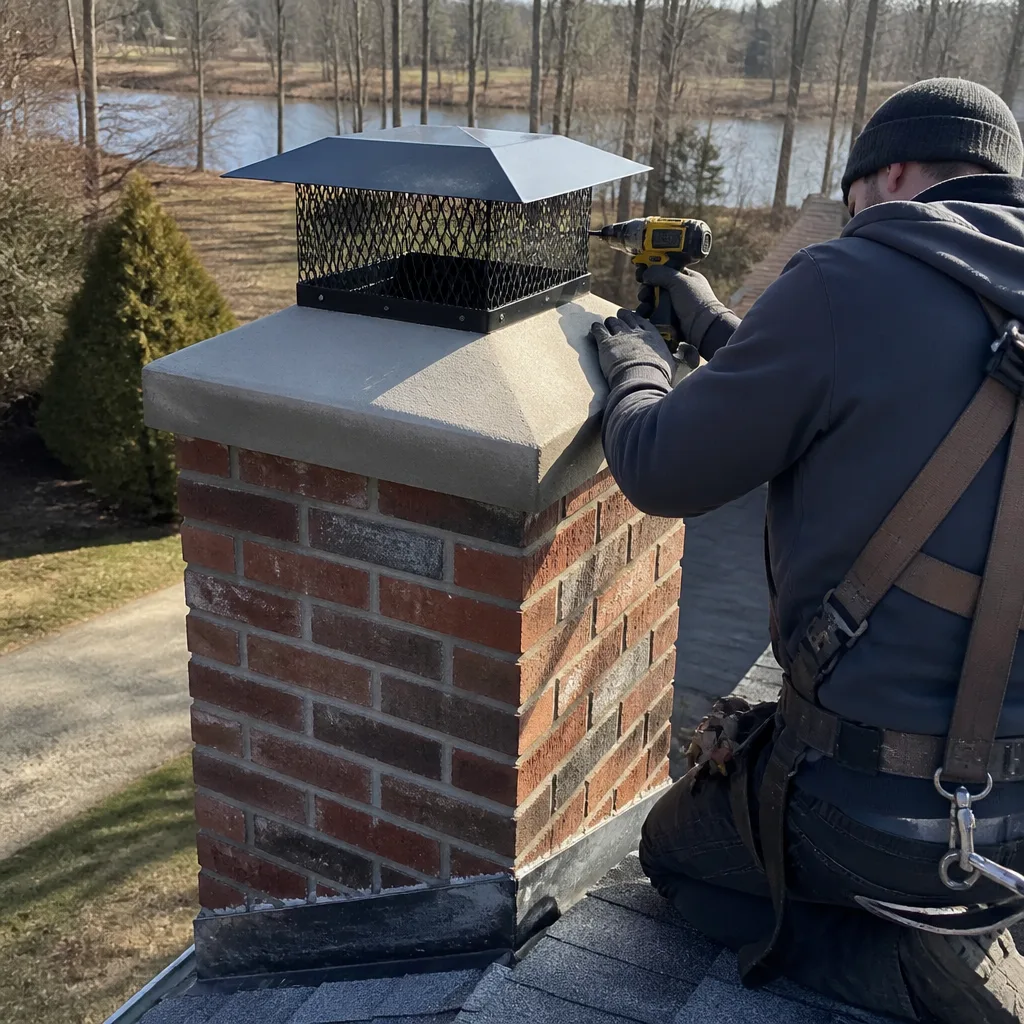 After
After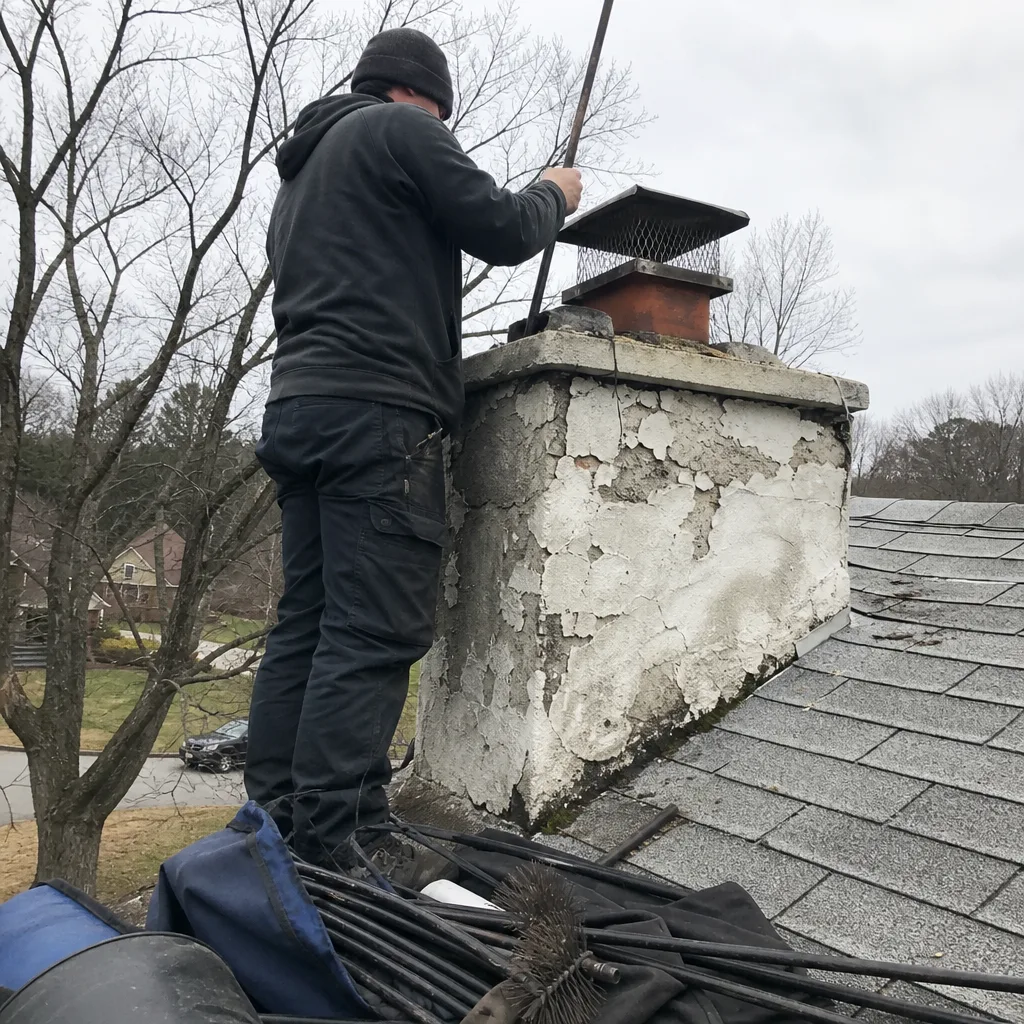 Before
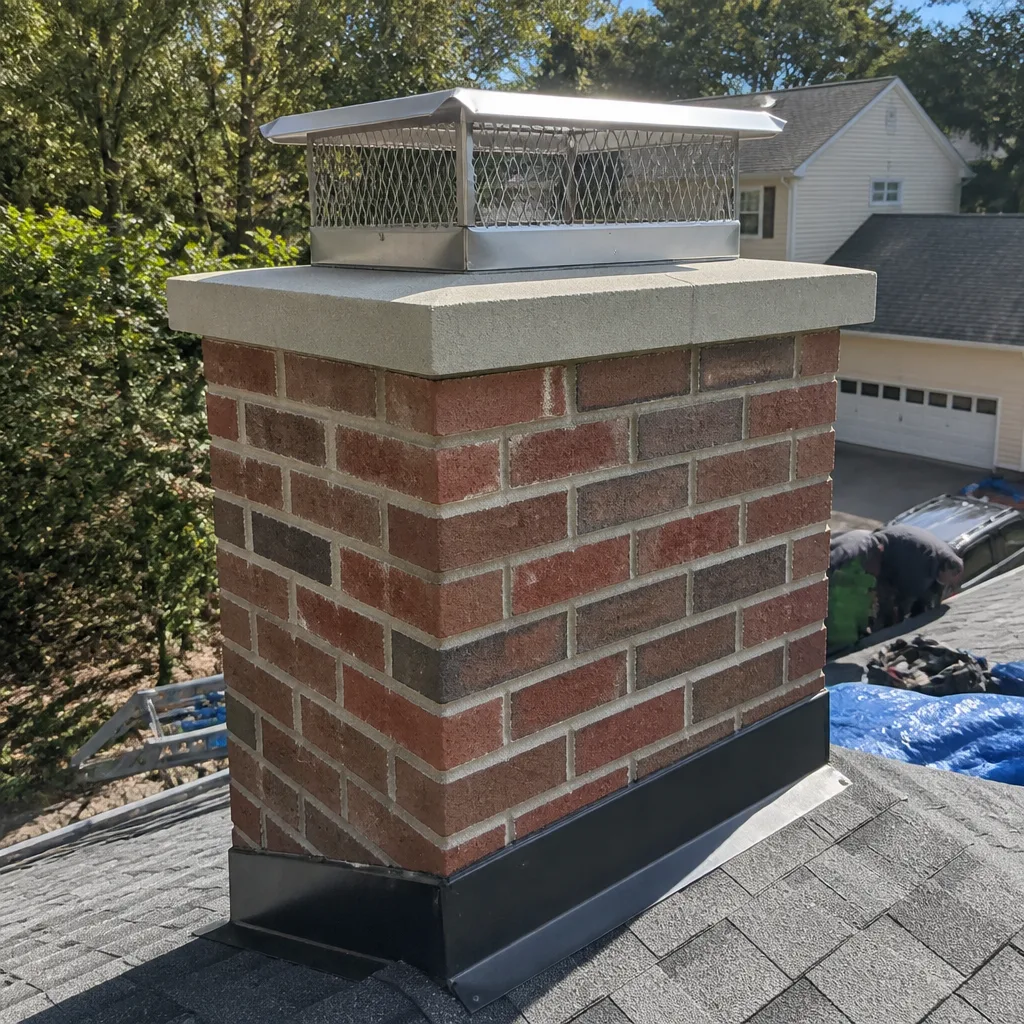 After
AfterChimney Cleaning & Sweep Maintenance Checklist for Waterford Homeowners
The most common thing Wendell finds when he arrives at a first-time customer’s house isn’t a dirty flue. It’s a small problem that became an expensive one because nobody knew what warning sign to look for six months earlier. A rusted damper plate. A hairline crack in the crown that let one freeze-thaw cycle too many do its work. A flashing seam that lifted just enough to quietly soak the attic insulation every time nor’easter rain blew in sideways off Long Island Sound. This guide - and our Chimney Cleaning Warning Signs: A Waterford Homeowner’s Reference Guide - walks you through what to check, room by room, season by season, so you catch those small problems before they become line items on a repair estimate. It’s written from what we’ve seen in Waterford chimneys since 1999, and it’s meant to be used, not bookmarked and forgotten.
Quick Answer
A proper chimney maintenance plan for a Waterford homeowner means three things: our Chimney Cleaning & Sweep services for an annual professional sweep and inspection (burn or no burn), a seasonal visual check of the firebox, damper, crown, flashing, and masonry you can do yourself in about 20 minutes, and a written or photo record of what you find so you can compare year over year. Most of the checklist takes no special tools and no ladders. The parts that require a licensed sweep are the parts where guessing wrong can burn your house down or kill you with carbon monoxide, and those we’ll flag clearly.
Table of Contents
- The Room-by-Room Walkthrough: What to Look for Inside
- The Firebox and Damper: What Good Looks Like
- The Roof and Exterior: Reading Your Chimney from the Outside
- Swept Math: Why Once a Year, Burn or No Burn, Is the Waterford Rule
- DIY vs. Licensed Sweep: Where the Line Actually Is
- Seasonal Checkpoints for Connecticut Weather
- How to Document Your Chimney Year Over Year
- What a 90-Day Done Right Promise Means on a Checklist Item
The Room-by-Room Walkthrough: What to Look for Inside
This is the part you do yourself, and it takes about 15 minutes if you do it right. Do it twice a year: once in early fall before burning season starts, and once in late spring after the last freeze. Don’t skip the spring check. Waterford chimneys break in the off-season more than they break during winter, because spring is when ice melts into every small crack and freeze-thaw cycles have done their worst.
What to look for in the room where the fireplace lives
Stand in front of the fireplace. Look at the floor, the hearth, the wall above the opening, and the ceiling. Now look at the same spots after the next hard rain. Here’s what bad looks like:
- Dark stains or soft drywall above the fireplace - this is moisture wicking down from a flashing or crown leak. By the time you see a ceiling stain in a Waterford living room, the leak has usually been active for months.
- A white, chalky film on the brick face or the hearth - this is efflorescence, salt pushed out of masonry by water moving through it. The water is the problem, not the salt.
- Rust-colored streaks on the damper or the firebox walls - you’ll check those more closely in the next section, but if you can see rust from across the room, water is getting in from above or the flue liner is sweating.
- A smoky smell in the room even when the fire is cold - this often reads as an airflow problem, but it’s usually a damper that doesn’t seat fully or a flue that’s partially blocked. Don’t burn until it’s checked.
- Shifts in the hearth tile or cracks in the mortar bed - chimneys settle and Waterford’s clay-heavy soil shifts with freeze and thaw. A crack that’s been the same width for three years is different from one that’s doubled since last spring.
None of these items require a ladder. None require tools. What they require is knowing what you’re looking at, and now you do.
The Firebox and Damper: What Good Looks Like
Open the damper. If it squeals, sticks, or won’t fully open or close, you’ll want that addressed before the rush. A damper that won’t close in January sends warm air up the flue all month and the person who notices is the one paying the heating bill. A damper that won’t fully open sends smoke into the house.
Inside the firebox, look for the following:
- Mortar joints that have gone from flush to recessed. Run your finger along a few joints. If you can hook a fingernail in the gap, the wastage is past surface-deep.
- Spalling brick, which is brick that flakes in layers. This is freeze-thaw damage, pure and simple, and it accelerates once it starts.
- Cracks wider than a dime in the firebox floor. Cement parquet in the firebox takes a beating from cooling-hot cycles. The floor is a fire barrier, not a decorative floor; if it’s failed, the wood under the hearth is closer to the flame than it should be.
- Creosote accumulation you can see without a flashlight. If it looks like black paint or glassy tar, not a thin gray dust, you’re past the brush-and-done stage. First-degree creosote is a brush job. Third-degree is a glaze - catch it early.
If the firebox floor has cracked, or the damper binds, stop the DIY there and let a sweep look. These are the checks that tell you whether the system is safe to run or just clean to run, and those aren’t the same thing.
The Roof and Exterior: Reading Your Chimney from the Outside
Most Waterford homeowners will need a ladder for this section, and I’ll say plainly: if you’re not comfortable on a ladder or your roof has a steep pitch or a second-story chimney, this is where a professional inspection is worth the fee every time. What you’re looking for from the ground and gutter line doesn’t change, so here’s what bad looks like from each vantage point.
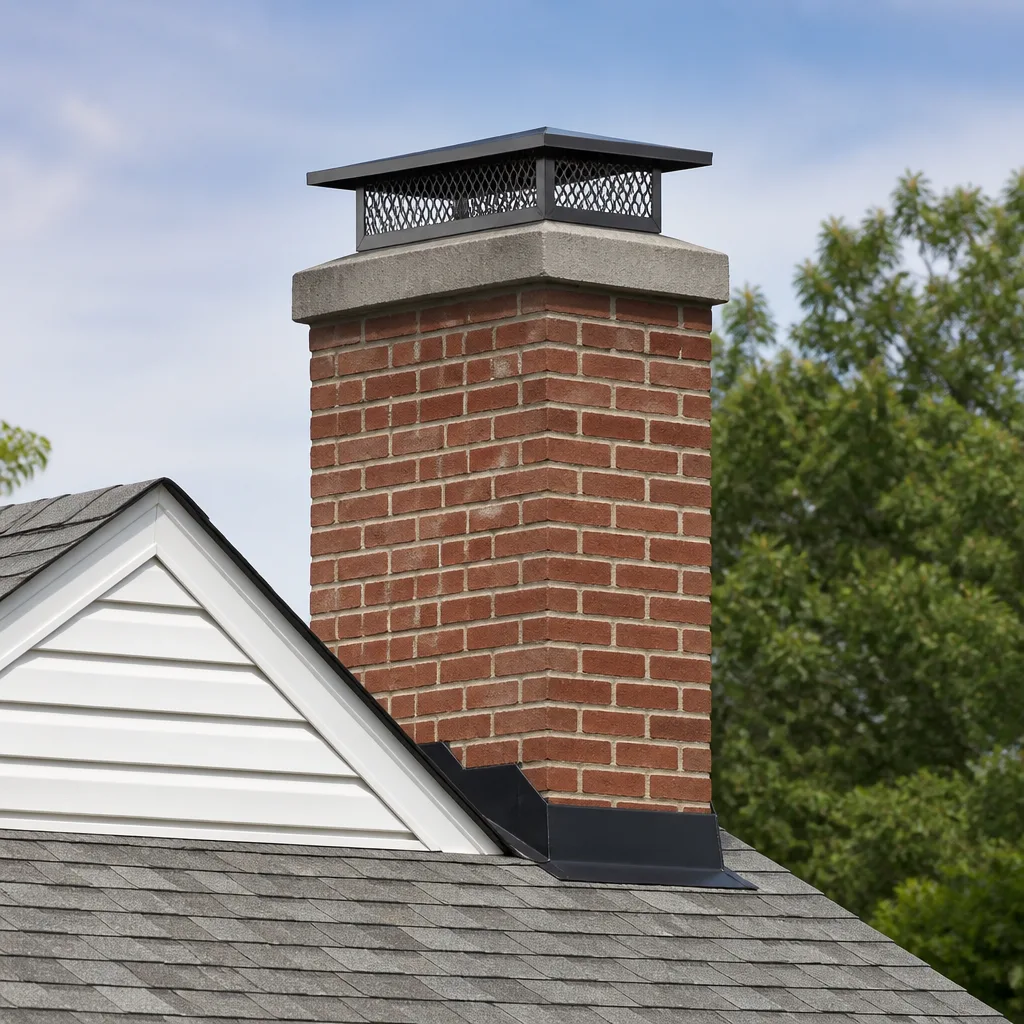
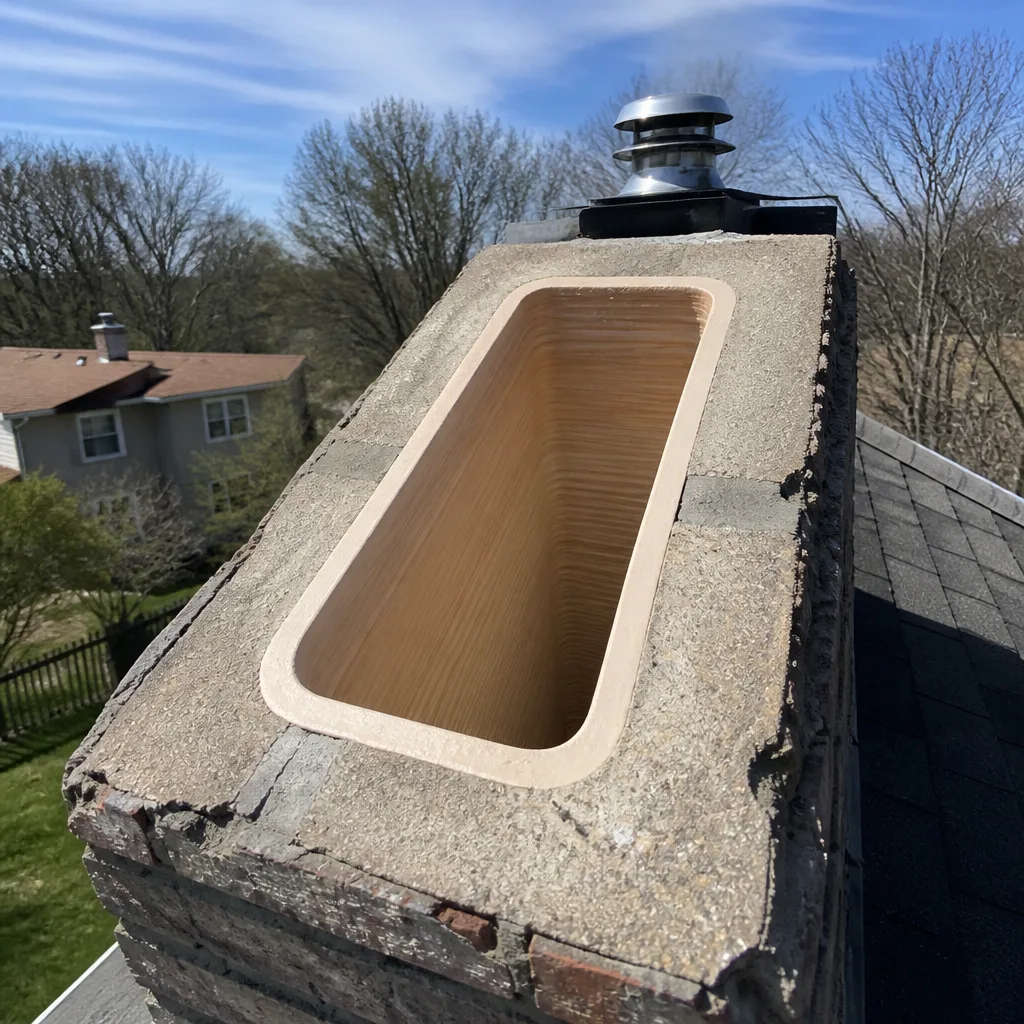
From the ground: Look up. A chimney that leans, even slightly, will show it as a cracked mortar line at one point and a compressed line at the opposite point. Look at the crown - the concrete cap at the top. If you can see metal mesh poking through or the cap has hairline cracks running across it, water is getting into the masonry. Waterford’s freeze-thaw cycles will widen those cracks every single winter.
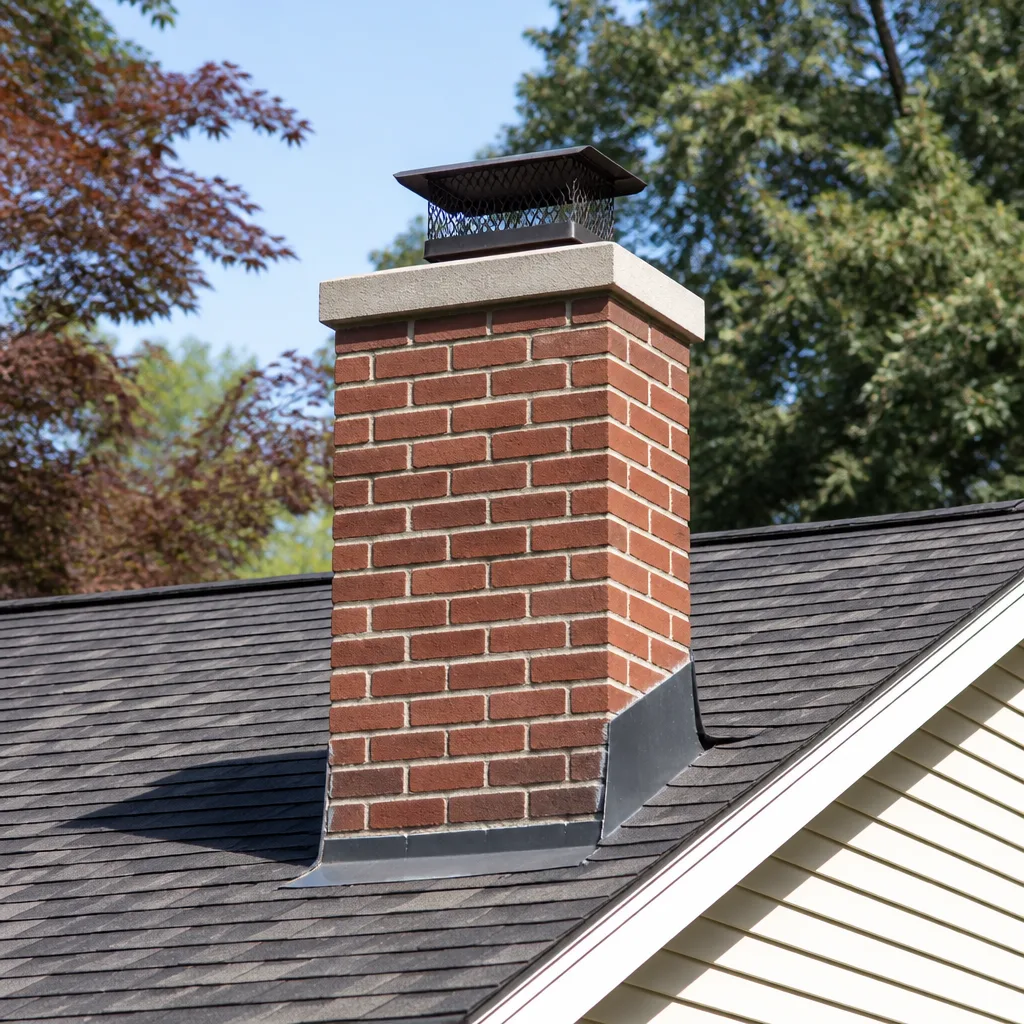
From the roof, or a spotting scope: The flashing is where the roof meets the chimney, and it’s the most common leak point in Waterford homes because our houses are older and our flashing is older. Bad flashing shows as lifted seams, missing step shingles, rust-through on the pans, or caulk smeared over gaps. Caulk is a temporary patch, not a repair. Proper flashing is interleaved metal and shingles, all under the next row up.
From the attic, after a hard rain: Bring a flashlight. If the chimney breast is damp, if the sheathing around it is stained, or if insulation looks matted and spongy, water is traveling down the outside of the flue. This is the check most people never do and it is how a roof leak stays hidden for years before it gets expensive.
What about the chimney cap? If you don’t have one, or if you have one that’s rusted through or missing side screens, you’ve created a rain-water-through-flue-and-animal-entry problem. A galvanized cap in Waterford, near the Sound, will rust faster than one inland. Stainless lasts long enough to make the cost difference irrelevant.
Swept Math: Why Once a Year, Burn or No Burn, Is the Waterford Rule
The National Fire Protection Association standard is simple: chimneys should be cleaned and inspected at least once a year, and more often if you burn a lot or burn green wood. For The Complete Guide to Chimney Cleaning in Waterford, here’s what that means in a Waterford living room, in plain terms.
Creosote doesn’t care how much you actually used the fire. What forms it is combustion that’s not fully efficient, and the kind of wood that burns in Waterford in January - whatever was available at the hardware store, whatever came down in the last storm - burns cooler and wetter than you think. The inside of a flue can build up enough creosote to be dangerous in one season, or two, or ten, depending on how hot and how dry your wood is. You will not know which you have without looking.
The other reason for the annual sweep, and the one Wendell emphasizes more, is what the inspection turns up that has nothing to do with soot. Liner cracks. Damaged flashing. Crown spalling. And in Waterford, where the housing stock skews older, the original flue may be unlined or clay-tile lined and well past its service life. Some of these conditions are fire-safety emergencies. Some are water-damage emergencies. Some are neither, and a good sweep will tell you plainly that the crown can wait until spring, but the damper is not safe this winter. Once a year, burn or no burn. Chimneys break in the off-season too.
For more on upkeep, see our Top Hat Chimney home guide to service area and seasonal advice.
DIY vs. Licensed Sweep: Where the Line Actually Is
A checklist that tells you to inspect your own flashing without telling you what bad flashing looks like is a waste of your afternoon. But a checklist that pretends every task is a DIY task is worse than useless - it’s dangerous. Here is where the line actually sits for a Waterford homeowner.
Safe to do yourself, with no special skill:
- Visual inspection of the firebox, damper, fireplace surround, and exterior masonry from the ground
- Testing the damper’s open-close action with a flashlight and a little patience
- Checking the attic for water staining after a hard rain
- Photographing and recording cracks, stains, and other changes over time
- Cleaning the firebox of ash and small debris between fires, once fully cold
- Keeping a log of wood type, burn frequency, and any odor or drafting changes
Requires a licensed professional, no exceptions:
- Removing accumulated creosote from the flue liner - the brushing is the safe part; knowing whether the liner condition makes it safe to brush is the professional part
- Repairing or replacing flashing - this is roof work, and Waterford’s older roofs don’t forgive a first-timer
- Crown repair or rebuilding - the crown is the unsung fire and water barrier of the whole system, and a patch job that looks fine in summer leaks by February
- Liner inspection and replacement - you cannot see the parts that fail from the roof or the firebox
- Anything requiring a ladder above the first story, a roof walk, or work on a steep pitch
The honest reasoning is not liability hedging. It’s this: the places where chimneys fail quietly are not visible to the homeowner, and the places where homeowners get hurt are the places they stop respecting. A hot flue, a long-handled brush, and a steep roof make a bad combination with a Saturday morning and a strong opinion about doing it yourself. Let a licensed sweep handle the roof and the liner. The rest is yours.
Seasonal Checkpoints for Connecticut Weather
Generic national advice says “inspect annually.” But Waterford doesn’t have a generic climate. We have salt air off Long Island Sound, freeze-thaw cycles that start in November and don’t stop until April, and a burning season that runs roughly from October through March. Here’s the seasonal calendar that actually applies.
Early fall, September to early October: Full visual walkthrough inside and out. Book the annual sweep and inspection for this window, before the rush. If the crown or flashing showed signs of trouble in spring, schedule repairs now, not in January. The fall window is when you want the professional opinion, not the emergency repair.
Mid-winter, January: Mid-season check. After the first two months of burning, check the damper operation, look for smoke backup when lighting a cold fire, and note any unusual odors. If you burn more than three cords a season, or you’re burning wood of uncertain dryness, consider a mid-season sweep. It’s cheaper than the alternative.
Late spring, April to May: The off-season check, and in Waterford, this is the one that catches the freeze-thaw damage. Walk around the chimney after the last hard rain, go into the attic with a flashlight, and compare what you see to your fall notes. Cracks that were hairline in October may be dime-width in May. Call before the next freeze cycle sets them deeper.
Summer, June to August: This is when waterproofing and masonry work actually gets done in Connecticut, because the weather holds. If the sweep flagged a crown or flashing issue that could wait, summer is when it shouldn’t. Waiting to November turns a scheduled repair into an emergency call.
How to Document Your Chimney Year Over Year
The single most useful thing a Waterford homeowner can do, after the visual check itself, is to write down what you saw. Your flue doesn’t care how the fire looks. It cares how it breathes. And you need a baseline to know when that breathing changes.
Grab a notebook or a digital note, and record the following every time you check:
- The date and whether it rained recently. Moisture without an obvious cause is different from moisture after three days of rain.
- Photos of any cracks. Same angle, same light if you can. A crack that hasn’t moved in two years tells a different story than one that’s doubled since last spring.
- Wood burned, if you keep a burn log. Hardwood tends to be drier and cooler-burning in the flue; softwood burns hotter and dirtier. The difference shows up in creosote accumulation.
- Any odor, smoke, or drafting changes. Note when it happens - cold start, wind direction, after a rain, after a long cold spell.
- The sweep’s written report from the last visit. Keep it. Compare the new report to the old one. A good sweep will tell you what changed and whether it matters.
The reason this matters in Waterford is that the housing stock is older and the chimneys are older and the problems are slower and sneakier. A record of what last year looked like is the difference between knowing something has shifted and guessing. Guessing wrong on a chimney costs real money.
What a 90-Day Done Right Promise Means on a Checklist Item
Most chimney companies sell an annual service contract. Top Hat Chimney, by contrast, backs every job - including the checklist items that turn into repairs - with a written 90-Day Done Right Promise. Here’s what that actually means when a checklist item becomes a work order. If the work isn’t right, one call brings Wendell back. No deductible, no “well, it depends.” It’s in writing on every single job, and it has been since 1999.
Why does a 90-day warranty matter more than an annual service contract? Because a warranty on the work you paid for is a guarantee from the person who did it. An annual contract is a retainer for a stranger’s schedule. When the person who did the work is the person who shows up again - the same face you saw at the hardware store on Saturday - the promise means something different. Wendell runs into you again on Saturday. He puts his name on the work. The 90-day promise is how that accountability gets written down.
On a checklist item - a relined flue, a rebuilt crown, a new damper, a repointed firebox - the Done Right Promise means if the repair fails inside 90 days, we’re back at no charge. If it fails on day 91, Wendell still wants the phone call. That’s not in the contract. That’s just how he’s worked since 1999.
When you’re comparing a national chain quote and a local quote, look at what happens after the check clears. You can ask on any street in Waterford. The answer will be the same. The local guy is still here. The chain’s number has changed three times since Christmas.
Common Mistakes to Avoid
- Burning green or wet wood because it was cheaper at the gas station. In Waterford’s climate, green wood produces creosote at an alarming rate and can double your required sweep frequency in a season.
- Ignoring a small damper problem. A damper that sticks or won’t close costs you heating dollars all winter, and it’s one of the most common repair items we see in Waterford homes that also have elevated carbon monoxide concerns.
- Patching a crown or flashing with caulk. In a Salt-air, freeze-thaw environment, caulk lasts a season. Real repair lasts years. The national chains love to caulk; it keeps them coming back.
- Thinking a clean-looking firebox means a clean flue. What you can’t see from the living room is what matters. The flue liner can be crusted with third-degree glaze while the firebox looks ready for a catalog photo.
- Postponing the spring inspection until fall. Waterford sees the worst freeze-thaw damage in the off-season. By October, that crack has been widened by six months of freeze cycles, and the repair is twice the cost.
- Hiring a sweep who won’t show you the inside of your own chimney. With modern camera equipment, a sweep should be able to show you, in real-time, what they’re seeing. If they won’t, or they can’t, the estimate is built on trust, not evidence. The camera footage and a plain-English verdict - every time, no exceptions.
- Assuming a chimney cap is a decorative option. In Waterford, near the Sound, a missing or rusted cap means rain straight down the flue and a rotating cast of raccoons and squirrels in the firebox.
When to Call a Professional
Call a licensed chimney professional if you see active water staining in the attic or living room, if the mortar joints in the firebox have opened wider than a dime, if you smell smoke or creosote when the fire is cold, if the crown is cracked enough to slide a penny into, if the flashing has lifted from the roof line, or if you haven’t had the flue inspected in two or more years. All of those are conditions a homeowner can identify but not safely remedy. Top Hat Chimney offers free estimates in Waterford - call (860) 390-4899. Wendell answers the phone, or someone on his crew does. No call center. No coupon tricks. The number you hear on the phone is the number on the invoice.
Frequently Asked Questions
A standard chimney cleaning and inspection in Waterford typically runs between $180 and $340, depending on the size of the flue, the height and angle of the roof, and what condition the liner is in when we get up there. That price includes the camera inspection and a plain-English verbal report of what we found. Top Hat Chimney charges no trip charge inside the county, and every job comes with the written 90-Day Done Right Promise. Call (860) 390-4899 for an exact quote - estimates are free.
Once a year minimum, burn or no burn, for the inspection if nothing else. If you burn more than three cords a winter, burn green or scavenged wood, or have an older unlined or clay-tile flue, you may need a mid-season sweep in January. Chimneys in Waterford take a beating from the salt air and the freeze-thaw cycles, and the off-season damage is the kind you only catch with an annual check.
Only if the current liner is cracked, spalling, or missing - and the only honest way to know is to put a camera up the flue and look. What we won’t do is sell you a liner because the sales sheet says it’s a good idea. If the liner is sound, we’ll tell you it doesn’t need replacing. Nothing is recommended without camera evidence you can see yourself. If a liner is needed, Top Hat Chimney installs trusted industry brands like Gelco, Olympia Chimney, and Copperfield, and the job is backed by the 90-Day Done Right Promise.
You’re gambling with two risks. One, a chimney fire, which can happen when the flue is lined with enough hardened creosote to sustain combustion at 2,000 degrees, cracking liner tiles and sometimes spreading fire through the chase. Two, carbon monoxide, which happens when a blocked or damaged flue sends combustion gases into the living space instead of up and out. Both are rare. Both are catastrophic. The annual sweep is the cheap insurance against both. Call (860) 390-4899 and we’ll set a date.
You can clean the firebox and check the accessible parts, but brushing the flue itself is a job for a licensed, insured sweep in our experience. The danger isn’t the brushing - it’s not recognizing a liner that’s already compromised, and then lighting a fire in it. A camera inspection catches that. A brush from the hardware store doesn’t. If you want to see the process or understand what a sweep looks for, see our Chimney Cleaning & Sweep in Waterford page.
Yes. The 90-Day Done Right Promise applies to every job Top Hat Chimney performs - sweeping, repair, cap and crown work, liner installation, the whole list. If the work isn’t done right, one call brings Wendell back, at no additional cost. It’s written on the invoice, not just claimed on the website. We’ve backed our work this way since 1999, and it’s why the customers we serve from Waterford keep calling us back. For repairs, see our Chimney Repair in Waterford page.
The Bottom Line
This checklist isn’t about becoming your own chimney sweep. It’s about becoming a homeowner who knows what normal looks like, so you recognize abnormal before it gets expensive. Walk the room, check the damper, look at the flashing after the next hard rain, and write down what you see. Do it in the fall and again in late spring. Let a licensed sweep handle the flue, the liner, the roof, and the camera, because those are the places where guessing wrong carries consequences. For more guides & resources, or if something on this list doesn’t look right, call (860) 390-4899. The estimate is free, the phone is answered by a live person, and the work is backed in writing. That’s how we’ve done it in Waterford since 1999, and that’s how the checklist gets done right.
Written by Wendell Pike, Owner at Top Hat Chimney, serving Waterford since 1999.