
Last updated September 10, 2026
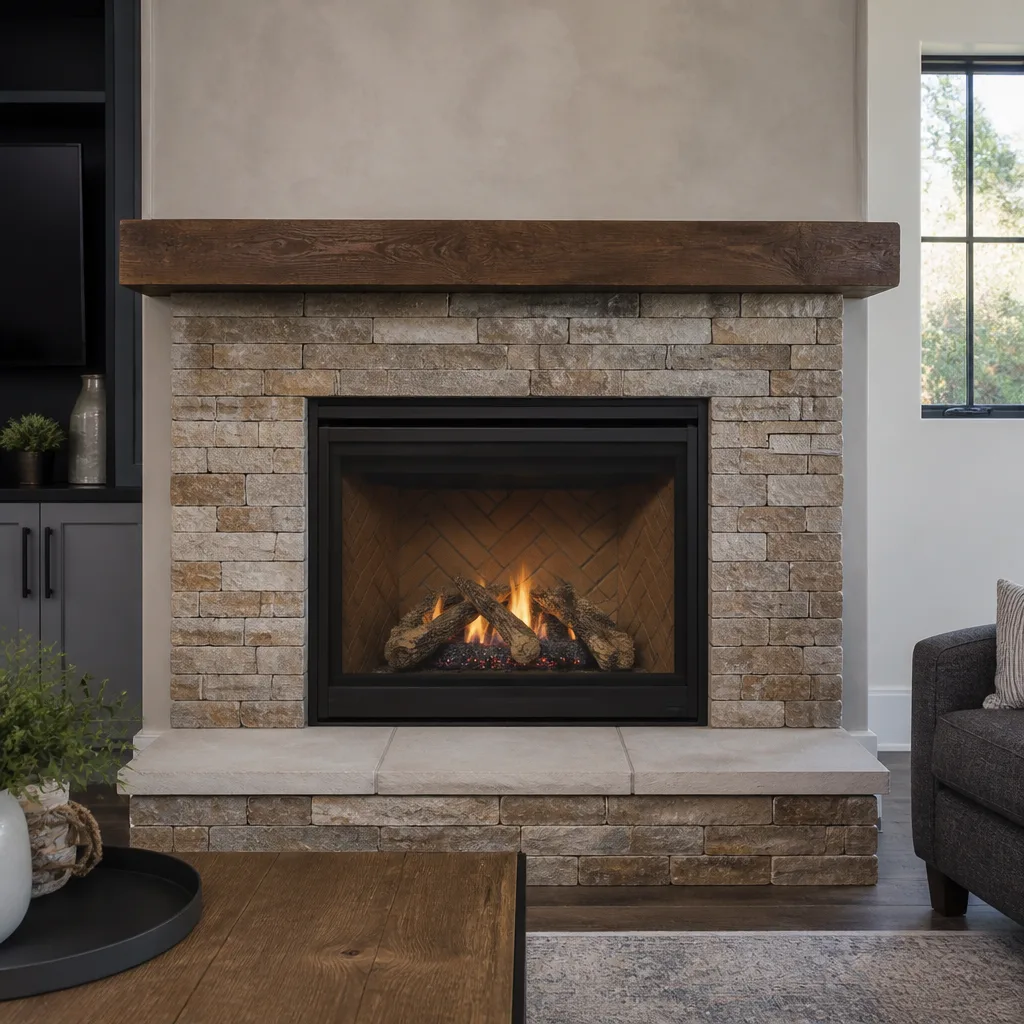
Level 1 sweep and inspection to the NFPA 211 annual standard - flue, crown, cap, and flashing checked and photographed
Chimney sweep logs do not sweep chimneys. They loosen some creosote - which then falls where a brush and vacuum still have to collect it.
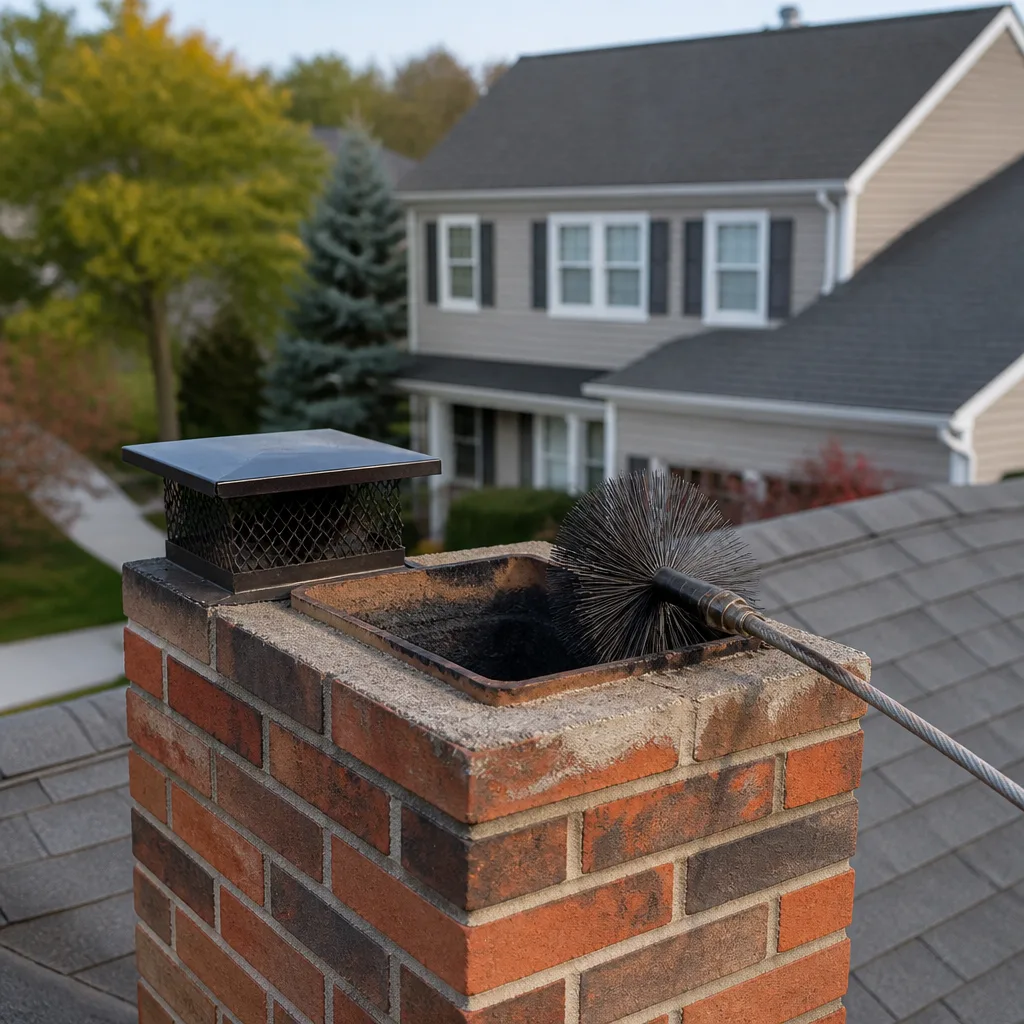
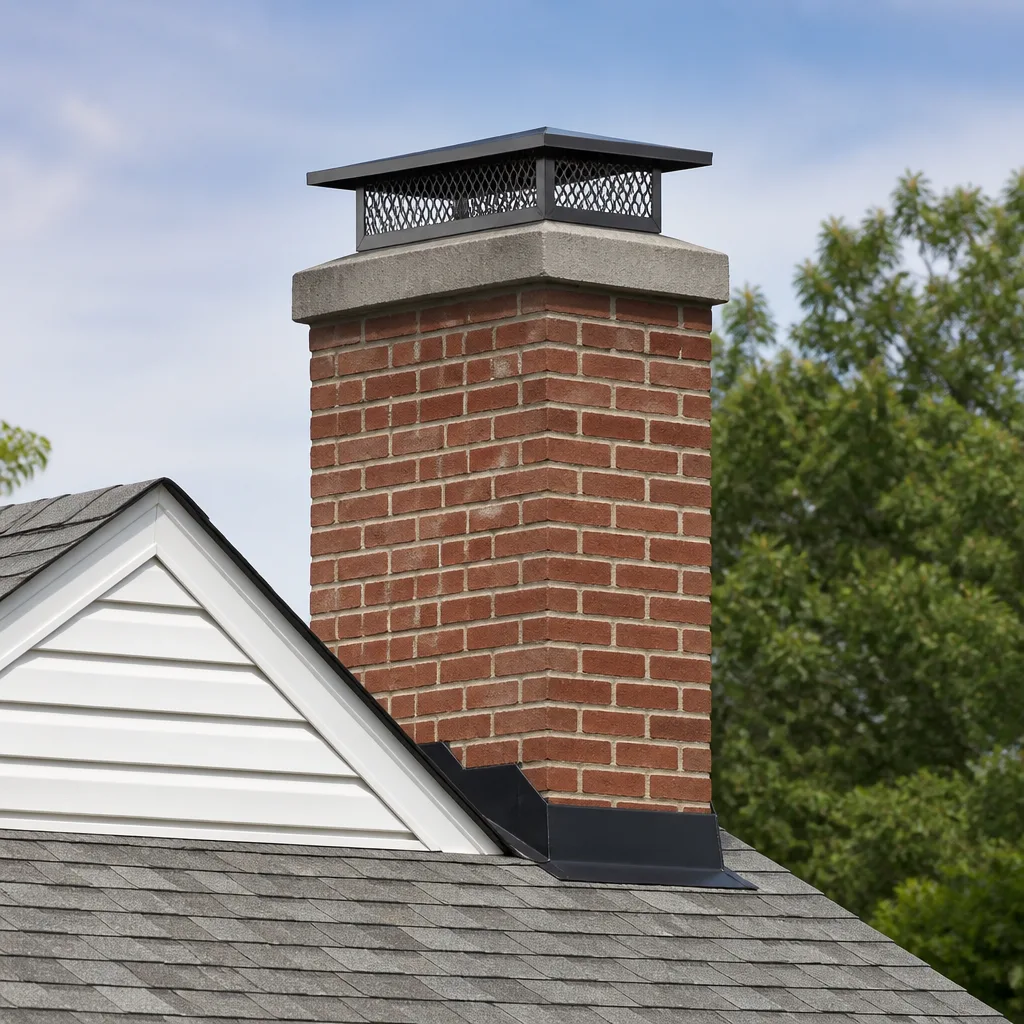
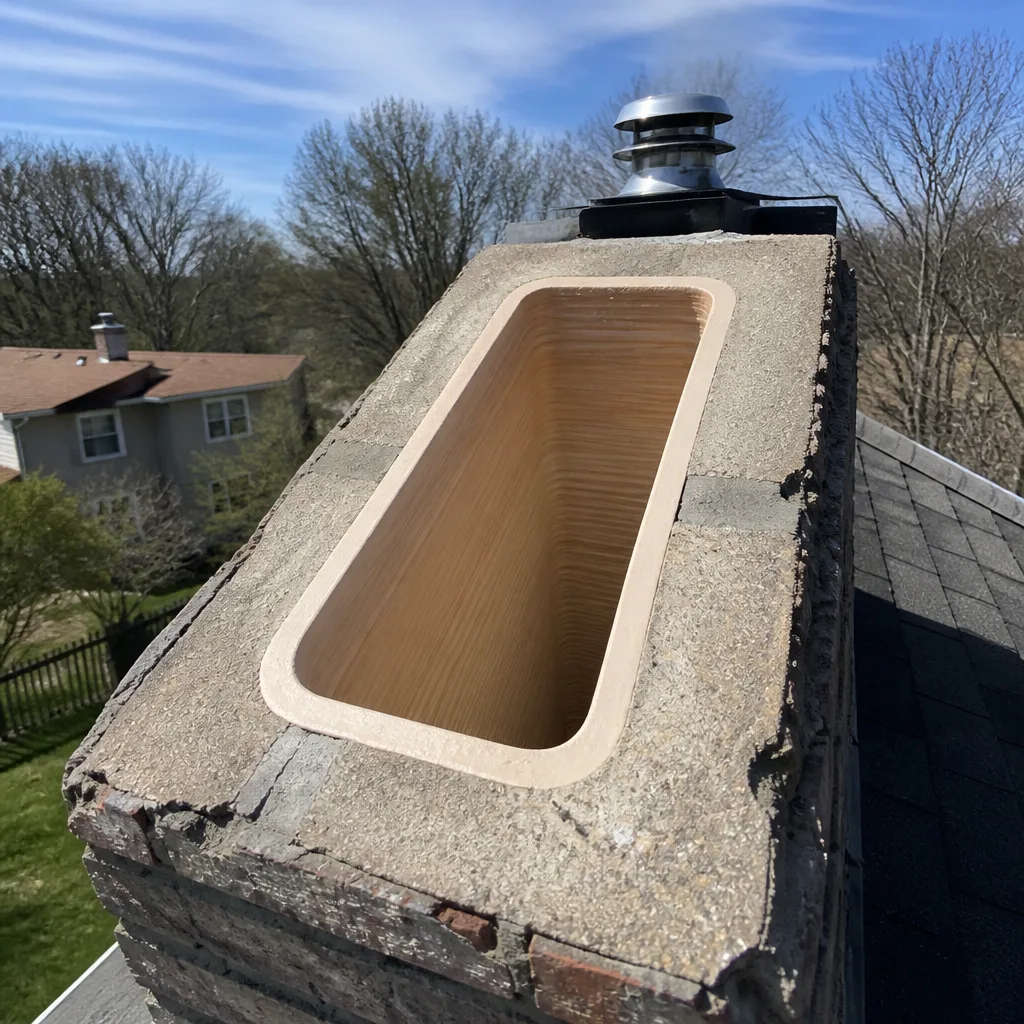
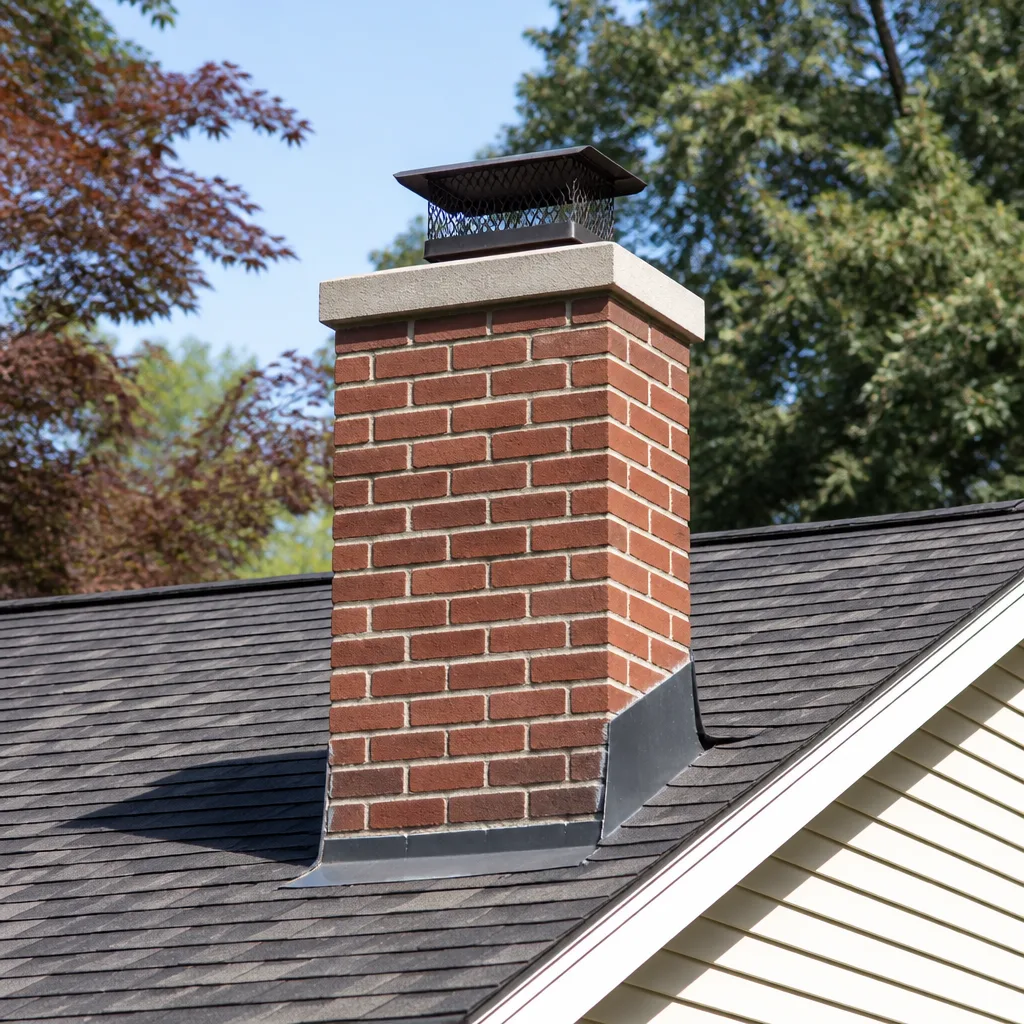
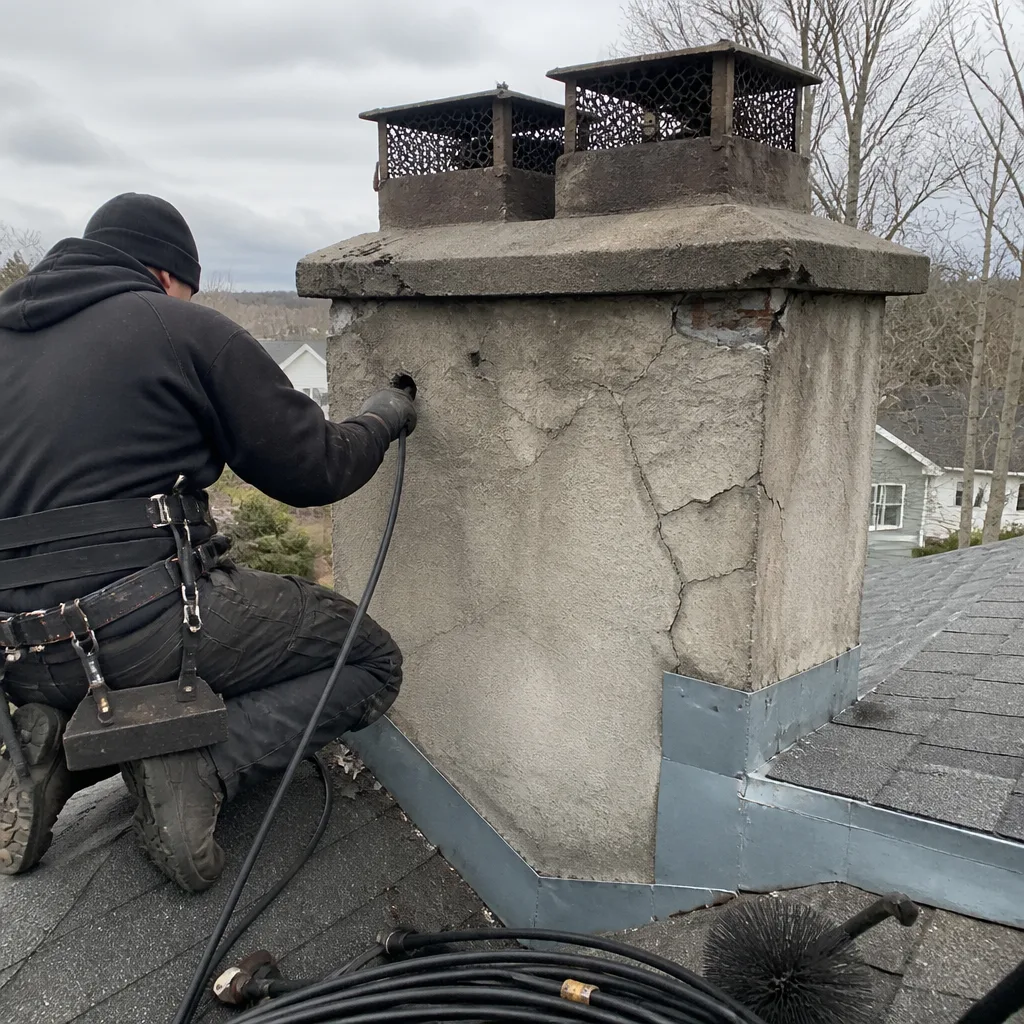 Before
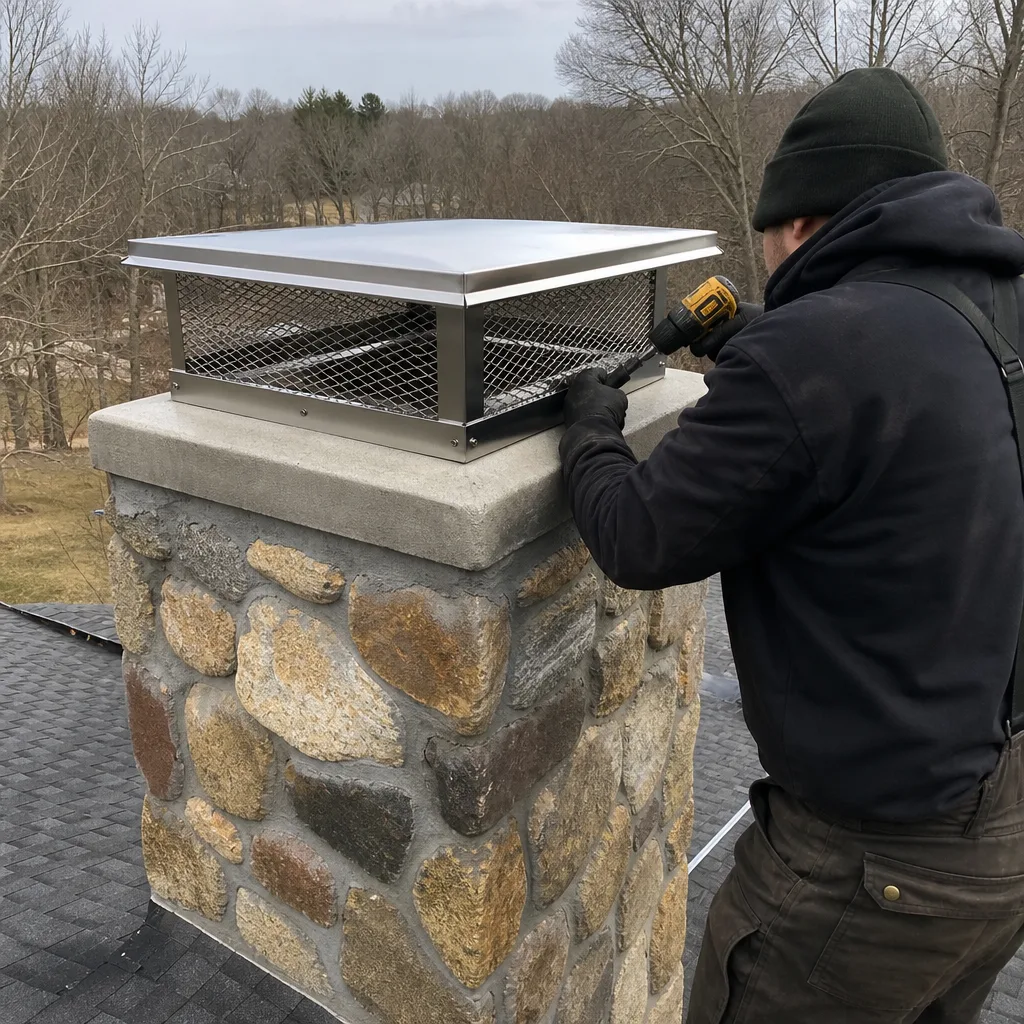 After
After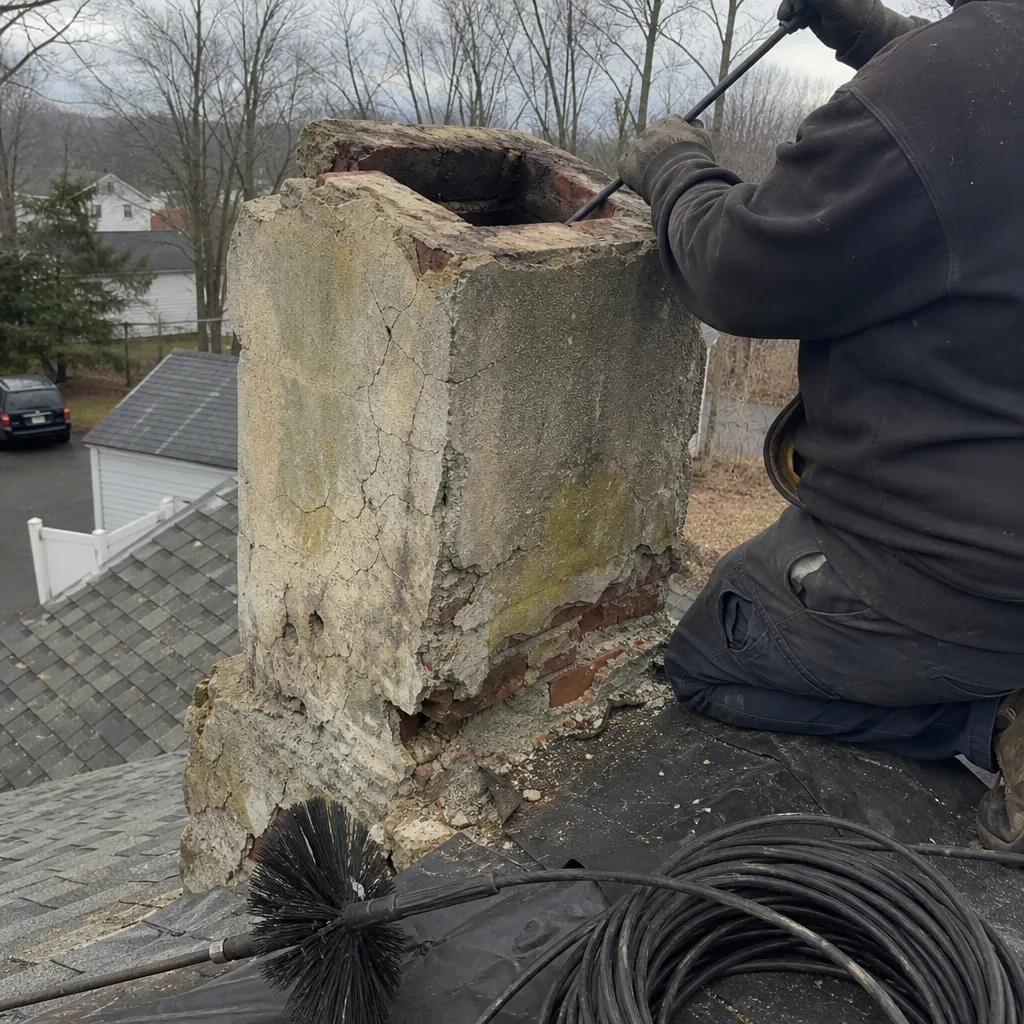 Before
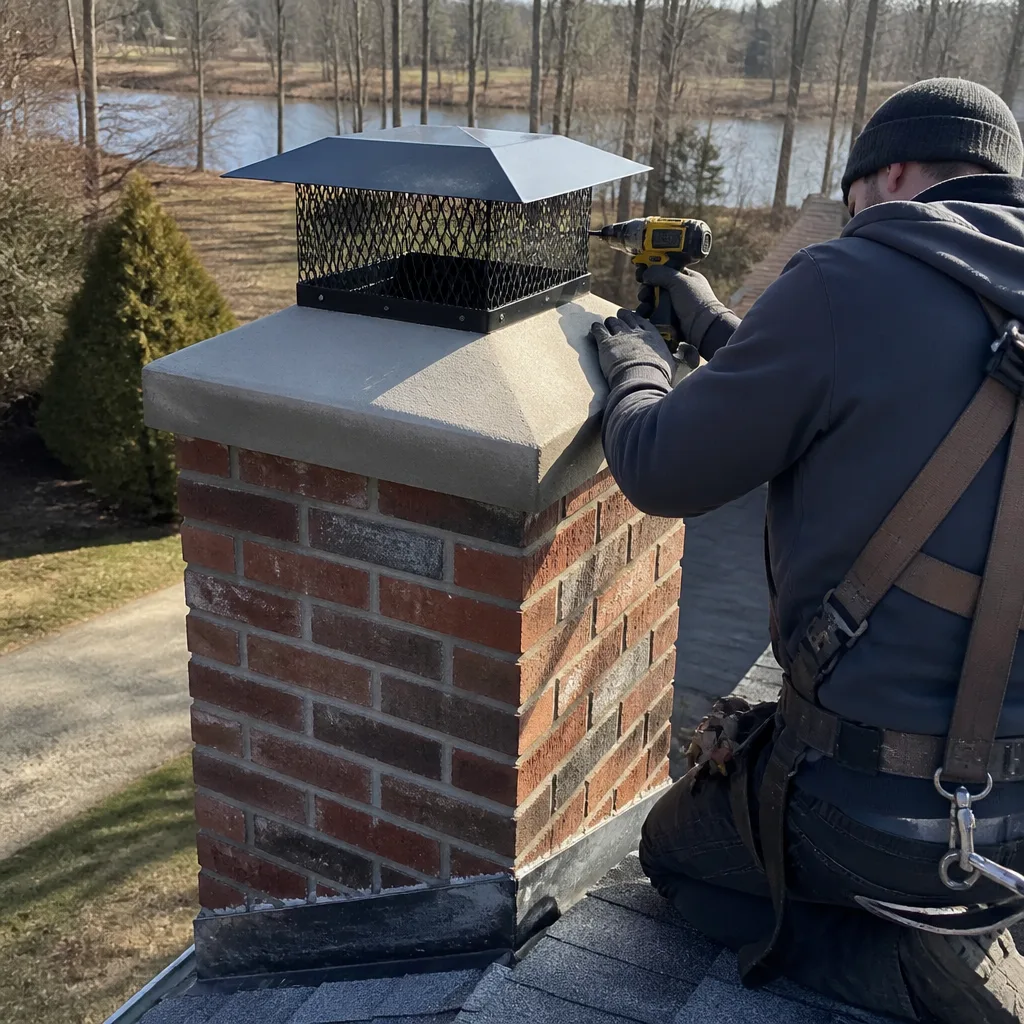 After
After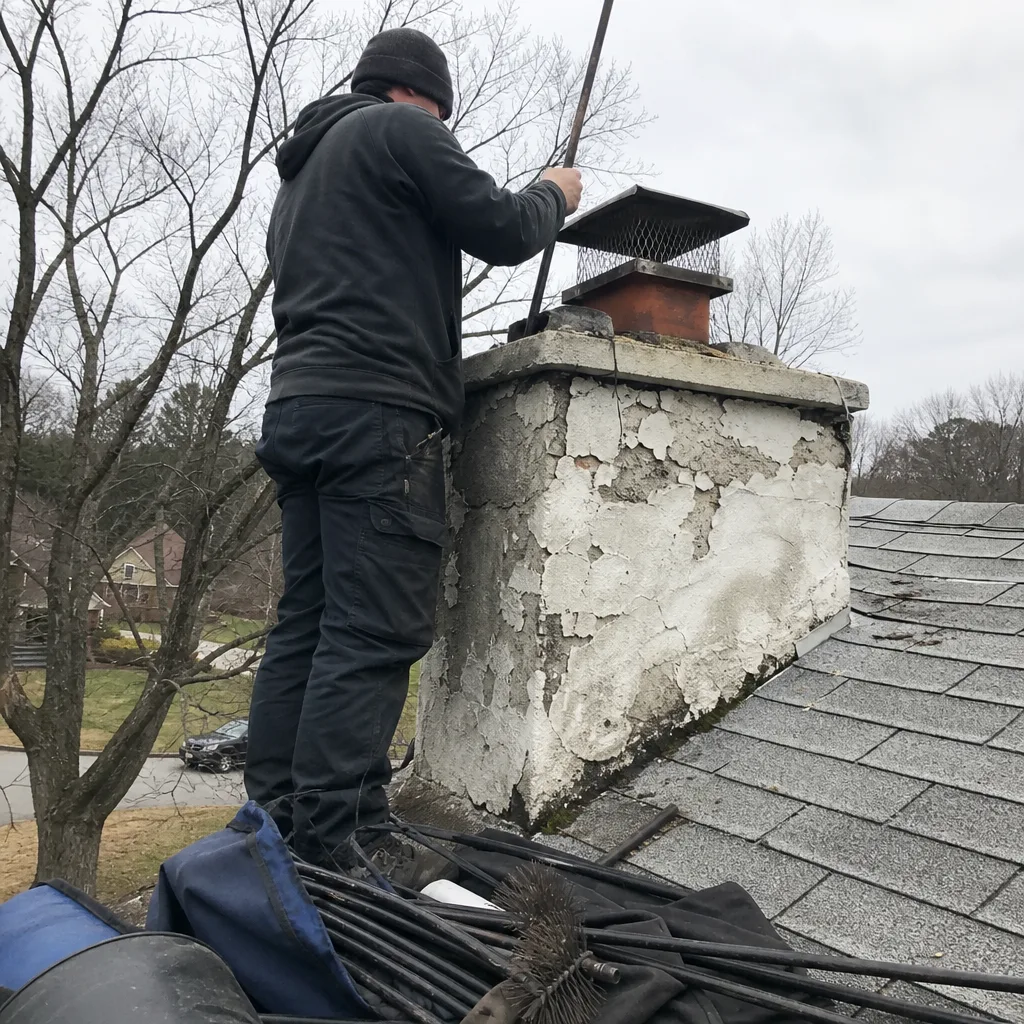 Before
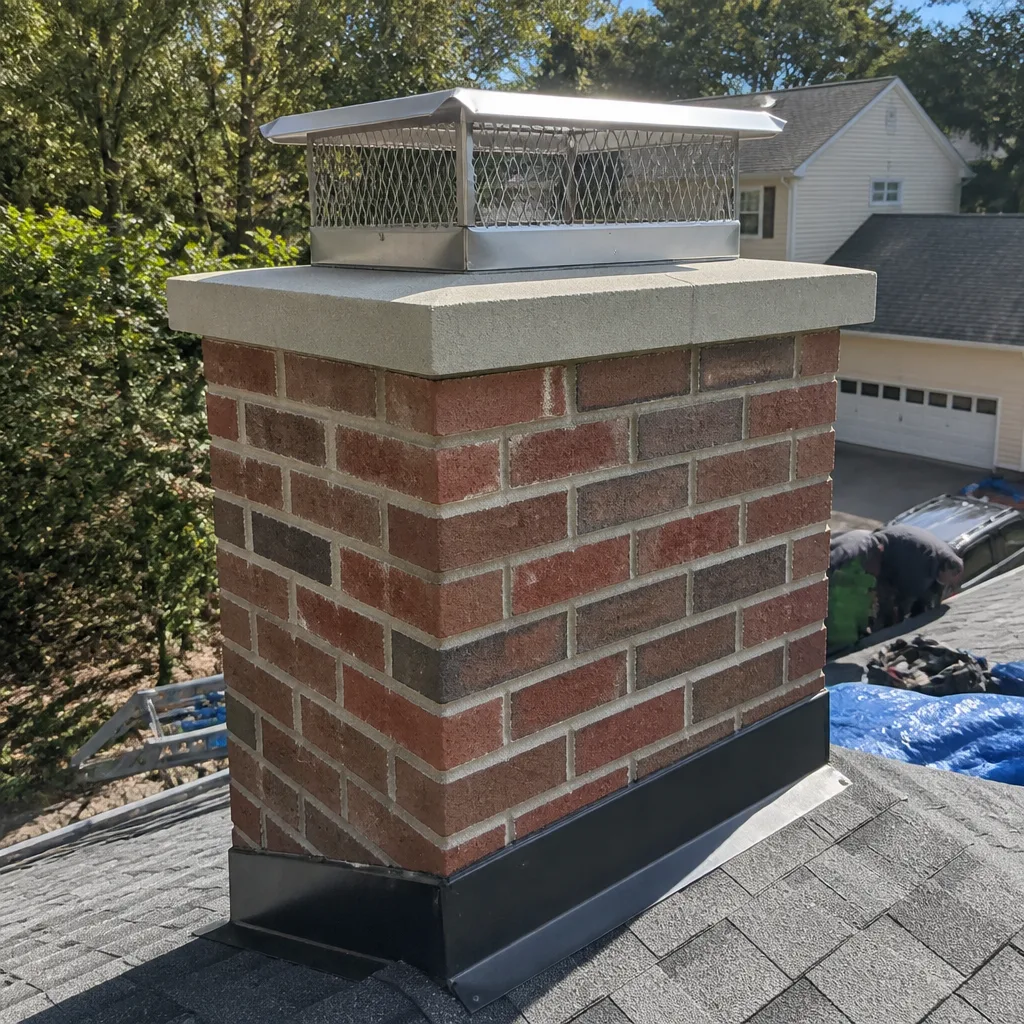 After
AfterThe Complete Guide to Chimney Cleaning in Waterford
Most chimney guides read like they were written by someone who has never stood on a slate roof in January with salt wind coming off Long Island Sound. This one is different. After more than 25 years of sweeping flues in Waterford and the surrounding New London County towns, we’ve learned what actually happens inside a chimney that burns Connecticut hardwood ten feet from a salt marsh. By the end of this guide, you’ll know what a cleaning really involves, what your sweep should be looking for, how to read a report without getting upsold, and why Waterford’s coastal air changes the math on chimney maintenance.
Quick Answer
A chimney cleaning in Waterford typically costs between $180 and $340 for a standard sweep and Level 1 inspection, and most homes need it once a year whether the fireplace gets used heavily or not. The real question is not how often you sweep but what the sweep finds once the brush comes out. A proper cleaning includes a visual inspection of the flue, smoke chamber, damper, cap, and crown, and it should end with a plain-English report you can actually understand.
Table of Contents
- How Waterford’s Coastal Air Affects Your Chimney
- Creosote: The Three Stages That Decide Everything
- What a Level 1 Inspection Actually Covers
- Older Waterford Colonials and Ranches: What We Look For
- How to Read a Sweep’s Report Without Getting Taken
- What Chimney Cleaning Costs in Waterford
- What Happens During a Cleaning, Step by Step
- Common Mistakes to Avoid
- When to Call a Professional
- Frequently Asked Questions
- The Bottom Line
How Waterford’s Coastal Air Affects Your Chimney
Waterford sits close enough to the water that salt air works on mortar joints in ways most inland chimney guides never mention, and most sweeps from out of town never think to check. The mechanism is straightforward: salt-laden moisture from Long Island Sound settles on brick and mortar, then the freeze-thaw cycle of a New England winter drives it deeper. Mortar that would last forty years in Hartford can start spalling in twenty-five here. We see it on Jordan Green, Quaker Hill, Oswegatchie, and all through the coastal neighborhoods that get the worst of the wind off the Sound.
What that means for you: the chimney that looked fine last spring may have developed hairline cracks by February. Salt accelerates the cycle. A crack that starts the size of a pencil lead becomes a quarter-inch gap after a few winters of ice expansion. Water gets in, the flue liner absorbs moisture, and what should have been a $250 cleaning turns into a $2,800 liner job because no one caught it early.
There are three things we check on every Waterford chimney that inland sweeps often skip:
- Mortar joint condition at the crown and top courses – this is where salt spray hits hardest, and it is the first place water intrusion shows up.
- Efflorescence on the brick face – that white powdery staining is salt and minerals being pushed out of the masonry. It tells us moisture is already moving through the brick.
- Flue liner surface condition – salt air corrodes clay tile liners faster than you would expect, especially in chimneys that see irregular use.
If you live within two miles of the Sound, you should assume your chimney is aging faster than the national average and plan inspections accordingly. Once a year, burn or no burn. Chimneys break in the off-season too, and around here the off-season is when the salt air does most of its work.
Creosote: The Three Stages That Decide Everything
First-degree creosote is a brush job. Third-degree is a glaze. Catch it early. That phrase is shorthand for something every homeowner should understand. Creosote is not one substance, it is a spectrum. And the stage you are dealing with matters more than the cleaning schedule itself.
Stage 1: Flaky soot and fine powder. This is what you get from hot, dry fires with seasoned hardwood. It brushes off easily. A standard sweeping removes most of it. This is the stage you want to stay in.
Stage 2: Crunchy, tar-like flakes. This forms when fires burn cooler, or when wood is not fully seasoned, or when the flue runs cold because it is oversized or uninsulated. It requires more aggressive brushing and sometimes chemical treatment. In our experience, many Waterford homes burn unseasoned red oak because it is everywhere in Connecticut, and red oak takes a full two years to season properly. That is the most common reason we see Stage 2 creosote in local chimneys.
Stage 3: Hard, shiny glaze. This is concentrated fuel. It looks like black glass coating the flue walls and it burns like candle wax. A standard brush will not remove it. Stage 3 creosote requires mechanical removal with rotary chains or chemical conversion treatments. It is also the stage where chimney fires become a real possibility, not a hypothetical.
Here is the part most guides skip: why stage matters more than schedule. A chimney that gets swept every year will almost never develop Stage 3 creosote, because the buildup never has time to compress and harden. A chimney that goes three years between cleanings can develop significant Stage 2 or early Stage 3 buildup even with moderate use. The annual cadence is not about the dirt itself. It is about catching creosote before it changes form.
What a Level 1 Inspection Actually Covers
The National Fire Protection Association defines three levels of chimney inspection. Level 1 is the standard that accompanies every routine cleaning. Here is what an honest Level 1 inspection actually covers, versus what gets skipped when a crew is rushing between jobs.
The full Level 1 checklist:
- Visual inspection of the flue interior using a flashlight and mirror or a basic camera. The sweep should look for creosote stage, flue tile cracking, missing mortar, and any obstruction.
- Smoke chamber inspection – the area above the damper where smoke compresses before entering the flue. This area collects creosote and can hide cracked brick.
- Damper operation check – does it open fully, close fully, and seat properly? A sticky damper is not just inconvenient, it changes how the fire burns and accelerates creosote.
- Chimney cap and spark arrestor check – is the cap secure, is the mesh intact, are there signs of animal entry?
- Flue tile visual check from the top and bottom where accessible – looking for vertical cracks, spalling, or missing sections.
- Exterior masonry check at the accessible areas – crown condition, brick face, mortar joints, flashing where visible.
- Clearances check – confirming that combustible materials around the fireplace and flue meet code.
What gets skipped when a crew is rushing: the smoke chamber. It is the hardest area to access and the easiest to gloss over. A sweep who is running behind schedule will shine a light up the flue, see mostly clear, and call it done. The smoke chamber is where creosote drips down and accumulates, and where cracked brick hides behind years of soot. Ask your sweep directly: “Did you look at the smoke chamber?” If he hesitates, you have your answer.
A proper Waterford chimney cleaning should include a camera inspection of the flue interior as standard. The camera footage and a plain-English verdict, every time, no exceptions. Not a five-second glance. Actual footage you can see with your own eyes.
Older Waterford Colonials and Ranches: What We Look For
Waterford has a lot of housing stock built between 1950 and 1985. Those colonials off Great Neck Road, the ranches off Rope Ferry Road, the capes along Boston Post Road. They were built in an era when fireplace clearances were looser and chimney liners were sometimes an afterthought. Here is what we look for in those older Waterford homes, the stuff that does not show up in a generic guide.
1. Missing or undersized flue liners. Many pre-1980s chimneys in this area were built with either no clay liner or a liner that is undersized for modern use. If you have an open fireplace that was converted to a wood stove, the liner size matters enormously. An oversized flue runs cold, creates condensation, and accelerates creosote. An undersized flue restricts draft and sends smoke back into the room.
2. Zero-clearance fireplace installations. Those prefab metal fireplaces that were popular in 1970s and 1980s ranches have a rated service life. When we inspect a home on Niantic River Road or in the Quaker Hill area with a metal fireplace from that era, we check the manufacturer’s data plate and the installation date if available. Many of these units are now past their original service life and were never designed to be used this heavily.
3. Single-wythe brick chimneys. Some older ranches and capes in Waterford have chimneys built with a single layer of brick instead of a proper masonry wall. These run hot, lose heat quickly, and crack faster under coastal freeze-thaw stress. If your chimney is on the exterior wall rather than running through the center of the house, this is worth a closer look.
4. Hearth extension violations. The standard requirement is that a hearth must extend at least 16 inches in front of the fireplace opening. Many older Waterford homes have hearths that fall short, often because the original hearth was decorative and a previous owner started actually using the fireplace. This is a findable, fixable issue that most sweeps never mention.
None of these findings mean your chimney is unsafe today. But they mean you should have someone who knows what these older homes look like take a close look, rather than a checklist-based inspection from someone who has never swept a chimney on the Connecticut coast.
How to Read a Sweep’s Report Without Getting Taken
The most common complaint we hear from Waterford homeowners is that a previous sweep recommended thousands of dollars in work they could not verify. The camera footage showed something dark and grainy, the report used words like “deterioration” and “compromised”, and the quote was huge. The homeowner had no way to judge whether the work was real or upsell.
Here is how to read a sweep’s report and know whether the recommended follow-up work is real.
- Ask to see the footage, not just the stills. A digital report with five blurry photos is not the same as watching the camera go up the flue in real time. If the sweep found a crack, you should see that crack on screen. If he found Stage 3 creosote, you should be able to see the glaze.
- Ask what the finding means in plain language. “Your flue liner shows signs of deterioration” is not an answer. “There are three vertical cracks in the top two flue tiles, and here is what they look like on camera, and here is what happens if we leave them for another year” is an answer. A real sweep explains. A salesman deflects.
- Ask whether the work needs to happen now or can wait. Some findings are immediate safety issues. Most are not. A flue tile with a hairline crack may be fine for another season or two with monitoring. A liner that has separated from the flue is a different story. An honest sweep will tell you the priority level, not just the price.
- Get a second opinion if the quote is over $2,000. Top Hat Chimney offers a free second opinion on any competing written estimate. If someone recommends a full liner replacement at a price that makes your eyes water, get another set of eyes on it. We will tell you if the work is real, if it can wait, or if it was never needed at all. No charge for the opinion.
- Look for before-and-after consistency. If the report says the flue is clean but then recommends a chemical cleaning treatment, ask why. If the report says the cap is secure but then recommends a new cap, ask why. Inconsistencies are the telltale sign of a template-based report filled out by someone who was not really looking.
A legitimate sweep report in Waterford should read like a conversation. It should tell you what was found, what it means, what the options are, and what can safely wait. If it reads like a menu of add-ons, that is what it is.
What Chimney Cleaning Costs in Waterford
Chimney cleaning in Waterford typically runs from $180 to $340 for a standard sweep with a Level 1 inspection. The variance comes down to a few factors: chimney height, roof pitch, level of creosote buildup, and whether any animal removal is needed. Here is the honest breakdown of what you should expect to pay and what every line item actually means.
| Service | Typical Range in Waterford | Notes |
|---|---|---|
| Standard chimney sweep with Level 1 inspection | $180 – $280 | Includes full flue brushing, smoke chamber check, damper check, cap check |
| Heavy creosote removal (Stage 2 or early Stage 3) | $280 – $450 | Requires more aggressive mechanical brushing and may include chemical treatment |
| Level 2 camera inspection (standalone) | $150 – $350 | Often bundled into the cleaning if you ask |
| Chimney cap replacement | $150 – $400 | Depends on cap material and flue size |
| Crown repair or rebuild | $400 – $1,500 | Coastal freeze-thaw makes this more common in Waterford |
| Flue liner replacement (stainless) | $2,500 – $6,000 | Varies by chimney height and liner type; we install DuraFlex and Olympia Chimney systems |
We quote a flat price before a single tool comes off the truck. The number you hear on the phone is the number on the invoice. No trip charge inside our service county, and we publish our pricing philosophy openly because we have been doing this since 1999 and we have nothing to hide. Seniors and veterans always get 10% off. Any repair over $200 gets $40 off. And if someone else gave you a written estimate, we will give you a free second opinion on it, no strings attached.
For the full scope of what a cleaning includes, see our Chimney Cleaning & Sweep in Waterford page. If you are dealing with something that goes beyond cleaning, our Chimney Repair in Waterford page covers the repair side in detail.
What Happens During a Cleaning, Step by Step
If you have never watched a chimney sweep work, the process can feel mysterious. It is not. Here is exactly what should happen when the sweep shows up at your Waterford home, step by step.
- Interior protection setup. The sweep should lay drop cloths from your front door to the fireplace, cover the hearth area, and set up a vacuum with a HEPA filter. If the crew walks in with no drop cloths and no vacuum, that is your first red flag.
- Fireplace and damper inspection. Before any brushing starts, the sweep should check the damper operation, look at the firebox condition, and note any visible cracking or damage.
- Brushing from the bottom up or top down. Most modern sweeps use a rotary brush system from the bottom, with a vacuum running to draw soot down and out. Some still sweep from the roof. Either method is fine if done carefully.
- Flue camera inspection. Once the flue is brushed, the camera goes up. This is the moment you should be watching. The sweep should narrate what you are seeing: flue tile condition, any cracking, any creosote that remains, any signs of water intrusion.
- Smoke chamber and damper area cleaning. The area above the damper is hand-cleaned or vacuumed to remove accumulated creosote. This step gets skipped more than any other.
- Cap and exterior check. Depending on roof access, the sweep will check the chimney cap, crown, and top courses of brick. In Waterford, this exterior check matters more than inland, because salt air and freeze-thaw cycles hit the top of the chimney hardest.
- Written report and walkthrough. You should get a plain-English summary of what was found, with photos or footage you can actually see. The sweep should explain anything that needs attention and tell you honestly what can wait.
This whole process takes between 45 minutes and two hours for most single-flue chimneys in Waterford. If a crew finishes in twenty minutes and hands you a report with stock photos, call someone else next time.
Common Mistakes to Avoid
- Skipping the annual sweep because the fireplace was barely used. You might think a fire or two per season does not justify the cost. But when a chimney sits cold and damp in Waterford’s coastal air, creosote absorbs moisture and becomes sticky, trapping more debris. Once a year, burn or no burn.
- Burning unseasoned red oak. Connecticut red oak takes two full years to season properly. Burning it after six months creates exactly the kind of cool, smoky fire that produces Stage 2 creosote fast. If your wood hisses or smolders, it is not ready.
- Trusting a quote without seeing the footage. Anyone can claim your flue is deteriorated. A camera does not lie. Watch the footage. Ask questions. If you cannot verify it, do not pay for it.
- Ignoring the exterior chimney condition. In Waterford, the top of your chimney takes a beating from salt air and ice. A cap that is loose or a crown that is cracked will let water in, and every dollar of water damage costs ten to fix later.
- Choosing a sweep based on price alone. The cheapest sweep is often the one who rushes, skips the smoke chamber, and “forgets” to show you the camera. The most expensive is often a franchise with a fixed menu. Look for someone who has been working in Waterford long enough to run into you on Saturday.
- Waiting until burning season to schedule. Every sweep in New London County is booked solid from October through January. Schedule your cleaning in the spring or summer, when the work gets done at a relaxed pace and problems get caught before the cold arrives.
- Assuming a new home does not need a cleaning. We sweep chimneys in Waterford homes that were “cleaned before settlement” all the time. The previous owner got a certificate, not a cleaning. Trust but verify.
When to Call a Professional
Some things around the house are worth doing yourself. Chimney cleaning is not one of them. The risk is not just the mess, it is what gets missed. A homeowner with a brush from the hardware store can remove loose soot, but they cannot see flue tile cracks, smoke chamber damage, or the early signs of water intrusion from a failed crown.
Call a professional when you see any of these: smoke backing up into the room, a strong campfire smell in the house even when the fireplace is cold, visible black glaze inside the flue, white staining on the exterior brick, rust on the damper, or any sign of water in the firebox after rain. Also call if it has been more than a year since the last cleaning, even if the fireplace has not been used heavily, and read our Seasonal Chimney Cleaning Care for Waterford: Year-Round Homeowner’s Guide to understand why.
Top Hat Chimney has been serving Waterford and the surrounding New London County towns since 1999. We offer free estimates, no trip charge inside our service county, and a 90-Day Done Right Promise on every job, in writing. Call (860) 390-4899 to schedule. A live person answers, and it may well be Wendell himself picking up.
Frequently Asked Questions
A standard chimney sweep with a Level 1 inspection in Waterford typically costs between $180 and $280. Heavy creosote removal runs higher, between $280 and $450, and camera inspections are often bundled into the cleaning if you ask. Call (860) 390-4899 for an exact quote, estimates are free.
Once a year, burn or no burn. Waterford’s coastal humidity accelerates creosote absorption even in unused chimneys, and the freeze-thaw cycle from Long Island Sound air stresses mortar joints regardless of whether the fireplace gets used. Annual sweeping is the cheapest insurance against a liner replacement.
Not always. A hairline crack in a flue tile can often be monitored for a season or two before replacement becomes necessary. You should ask to see the camera footage, ask what the finding means in plain language, and get a second opinion on any liner quote over $2,000. Top Hat Chimney offers free second opinions on any written estimate.
Creosote builds in stages. Year one without cleaning produces flaky soot that is easy to remove. Year two produces tar-like flakes that require more aggressive brushing. Year three or four can produce Stage 3 glaze, a hard, shiny coating that burns like candle wax and requires mechanical removal. The longer creosote sits, the harder it becomes to remove and the higher the risk of a chimney fire. Call (860) 390-4899 to get caught up before the stage advances.
Yes. The annual cleaning is not just about creosote volume. It is about the inspection that happens alongside it. In Waterford, salt air and coastal moisture damage chimney exteriors even when the fireplace sits unused, and the only way to catch that damage early is with an annual visual check by someone who knows what to look for.
A sweep removes creosote and soot from the flue. An inspection evaluates the condition of the chimney itself: liner, mortar joints, cap, crown, and clearances. A proper chimney cleaning should always include a Level 1 inspection as part of the service. If your sweep separates them out as an add-on, ask why. At Top Hat Chimney, the inspection is part of every cleaning, every time.
The Bottom Line
A chimney in Waterford needs more attention than a chimney in Hartford, and the reason is the salt. The air off Long Island Sound works on mortar and liner in ways that accelerate every problem a chimney can have, and the only defense is a consistent annual routine with a sweep who knows this coastline. Get swept once a year, watch the camera footage, ask questions until the answers make sense, and never pay for work you cannot verify. For more guides & resources on keeping your chimney safe, explore our blog. Your flue does not care how the fire looks. It cares how it breathes. And in Waterford, it breathes salt air all year long.
If you need a chimney cleaning in Waterford, call Top Hat Chimney at (860) 390-4899. We have been serving local communities since 1999, we answer the phone with a live person, and we put our name on every job. Also see our Fireplace Services in Waterford page for the full range of what we do, or return to the Top Hat Chimney home page to learn more about the company.
Written by Wendell Pike, Owner at Top Hat Chimney, serving Waterford since 1999.