
Last updated September 10, 2026
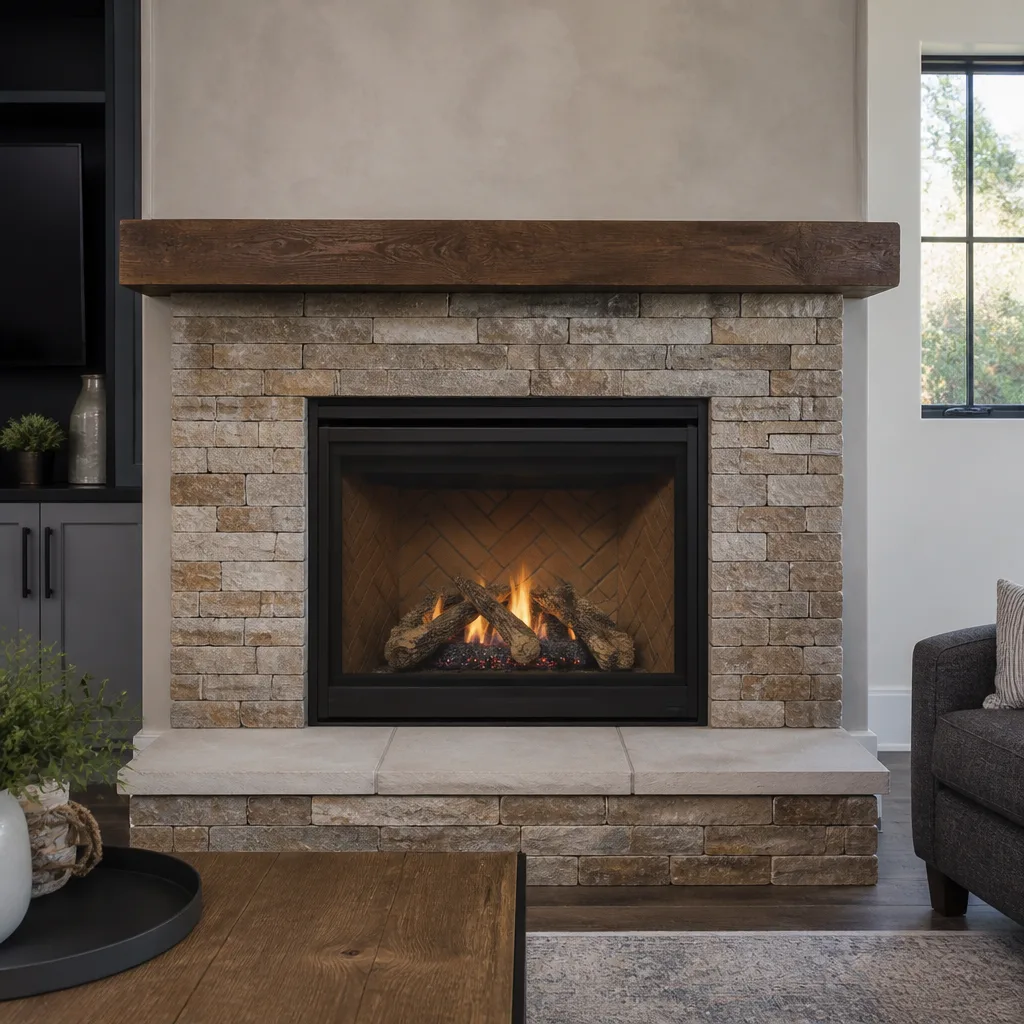
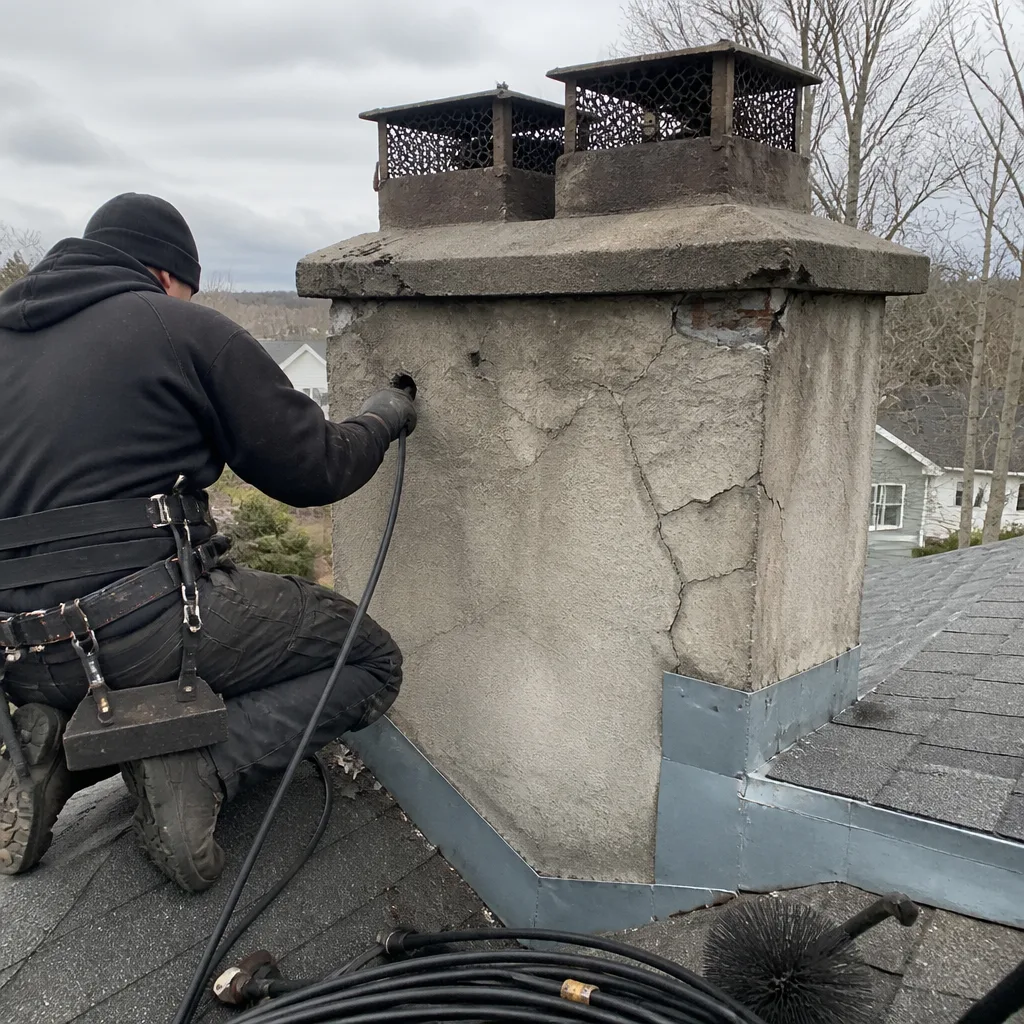
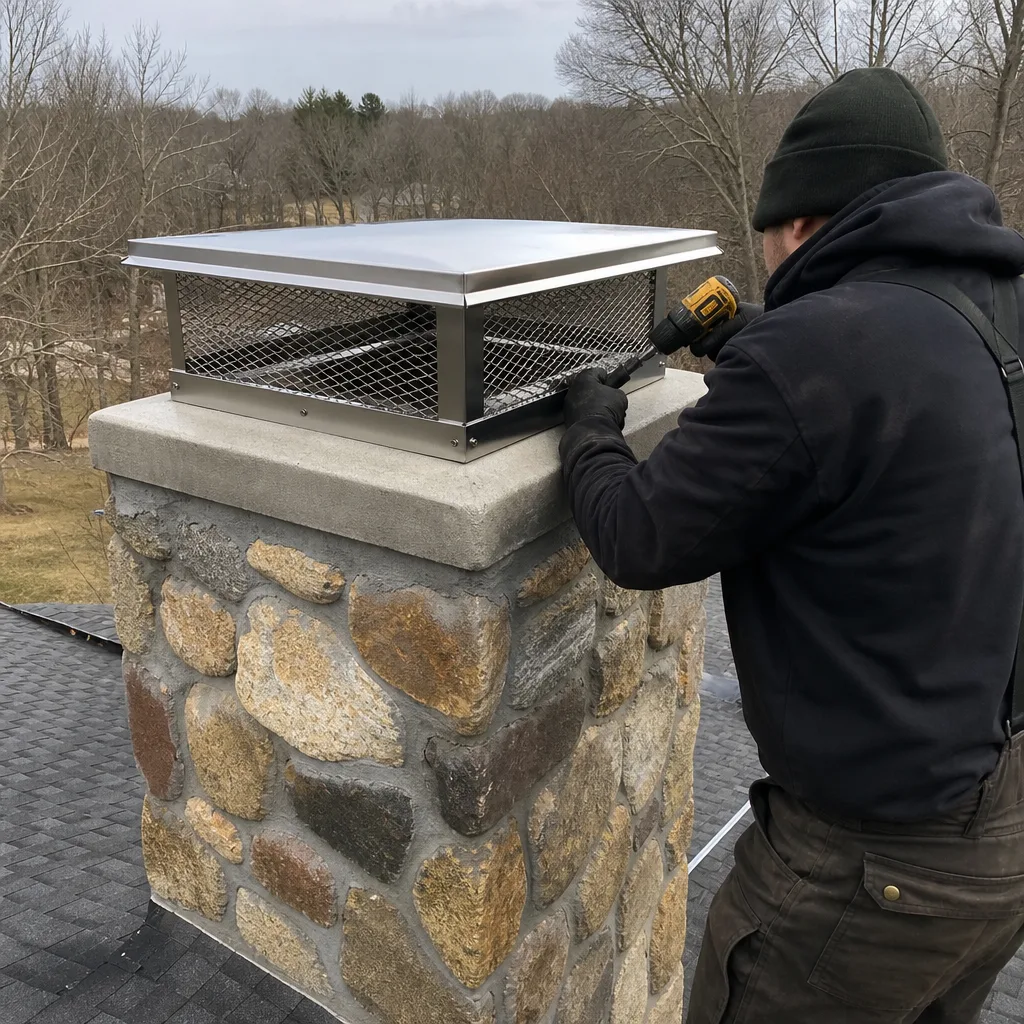
Level 1 sweep and inspection to the NFPA 211 annual standard - flue, crown, cap, and flashing checked and photographed
Chimney sweep logs do not sweep chimneys. They loosen some creosote - which then falls where a brush and vacuum still have to collect it.
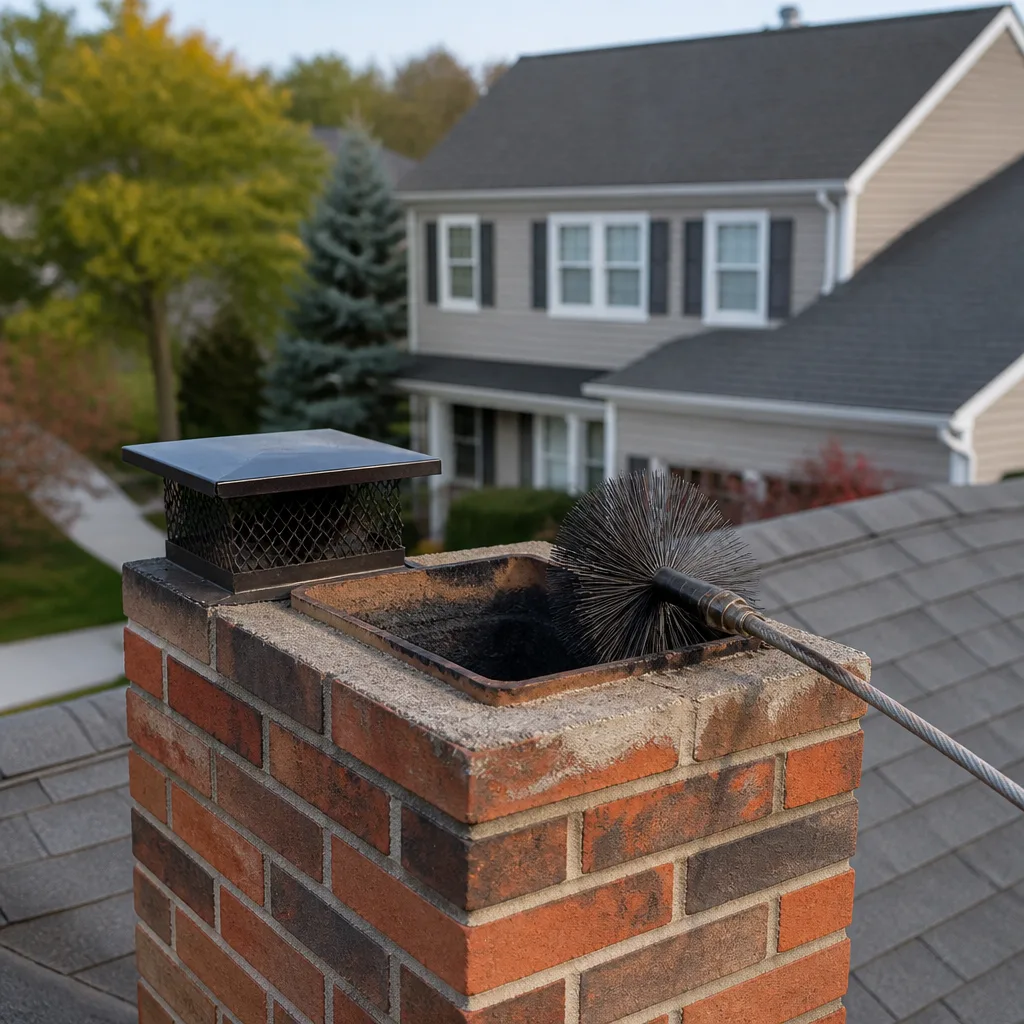
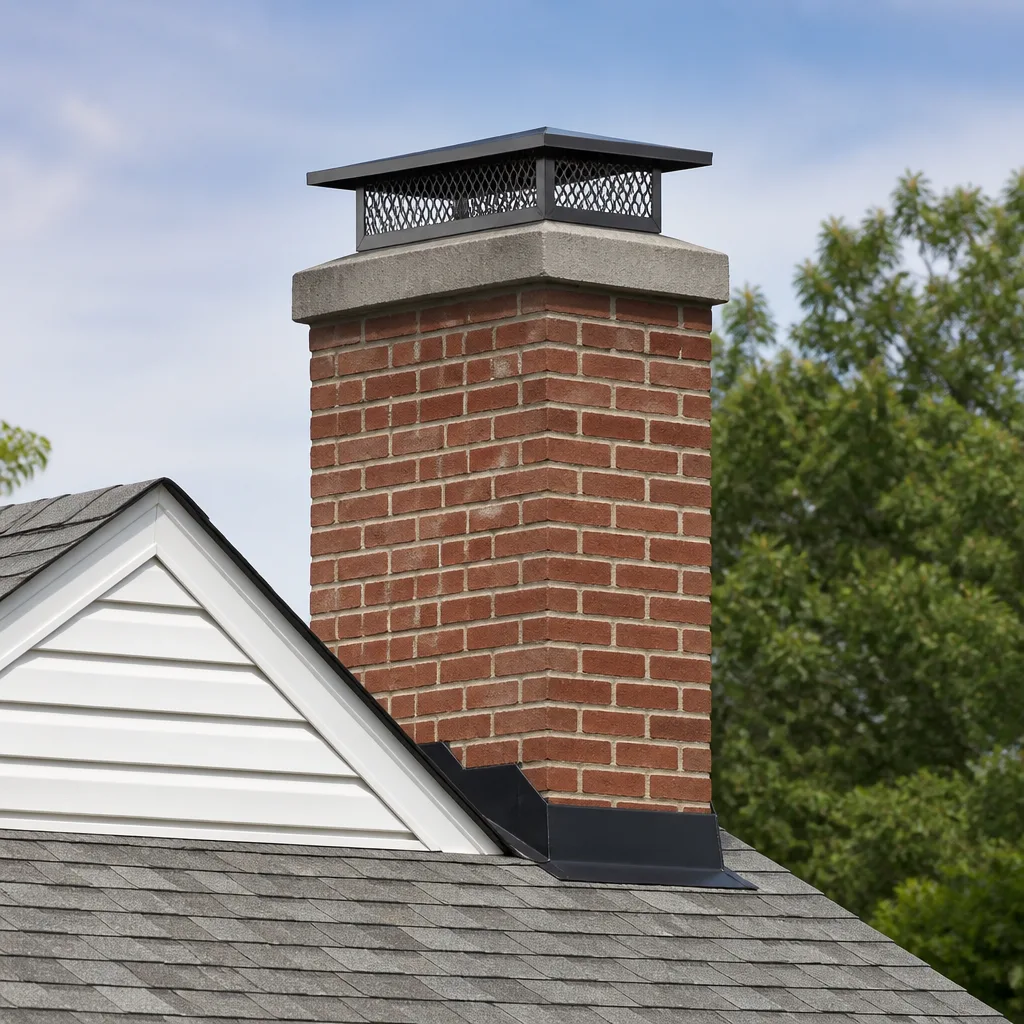
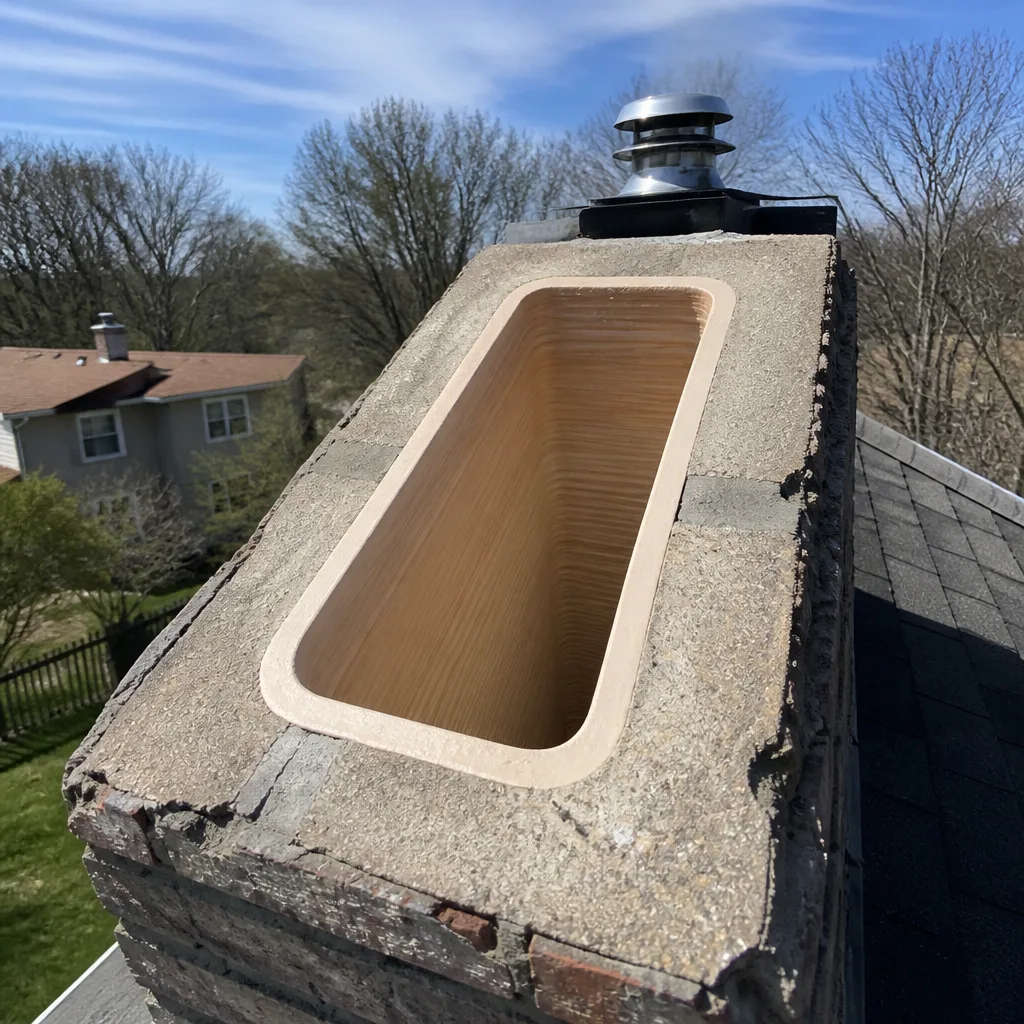
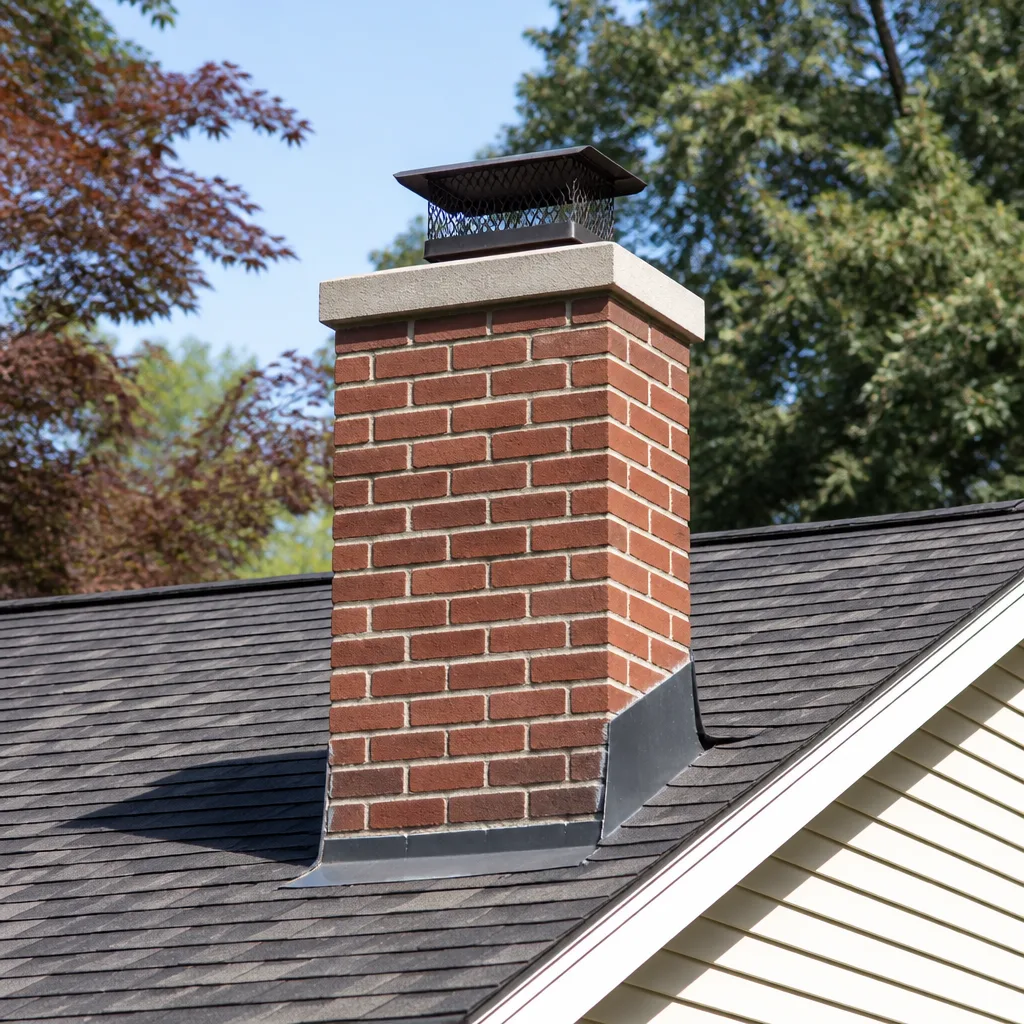
 Before
 After
After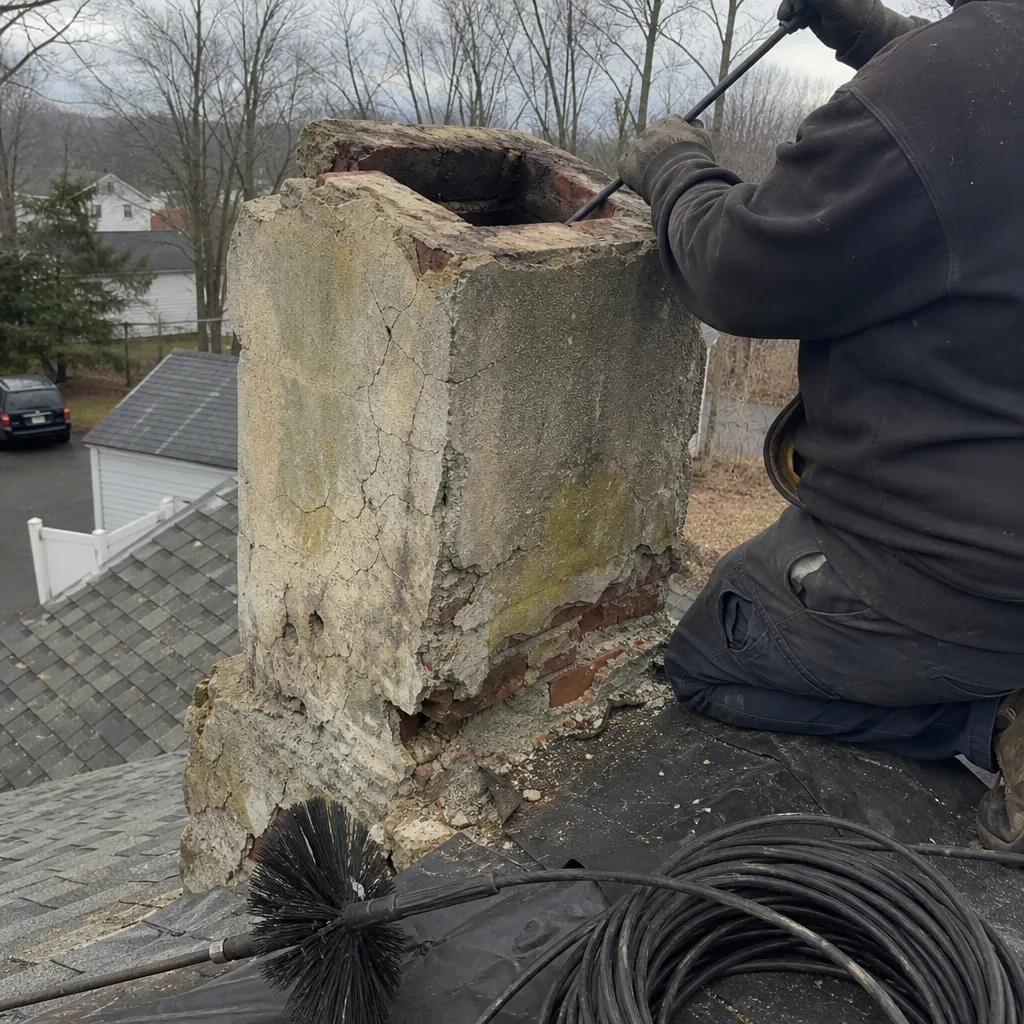 Before
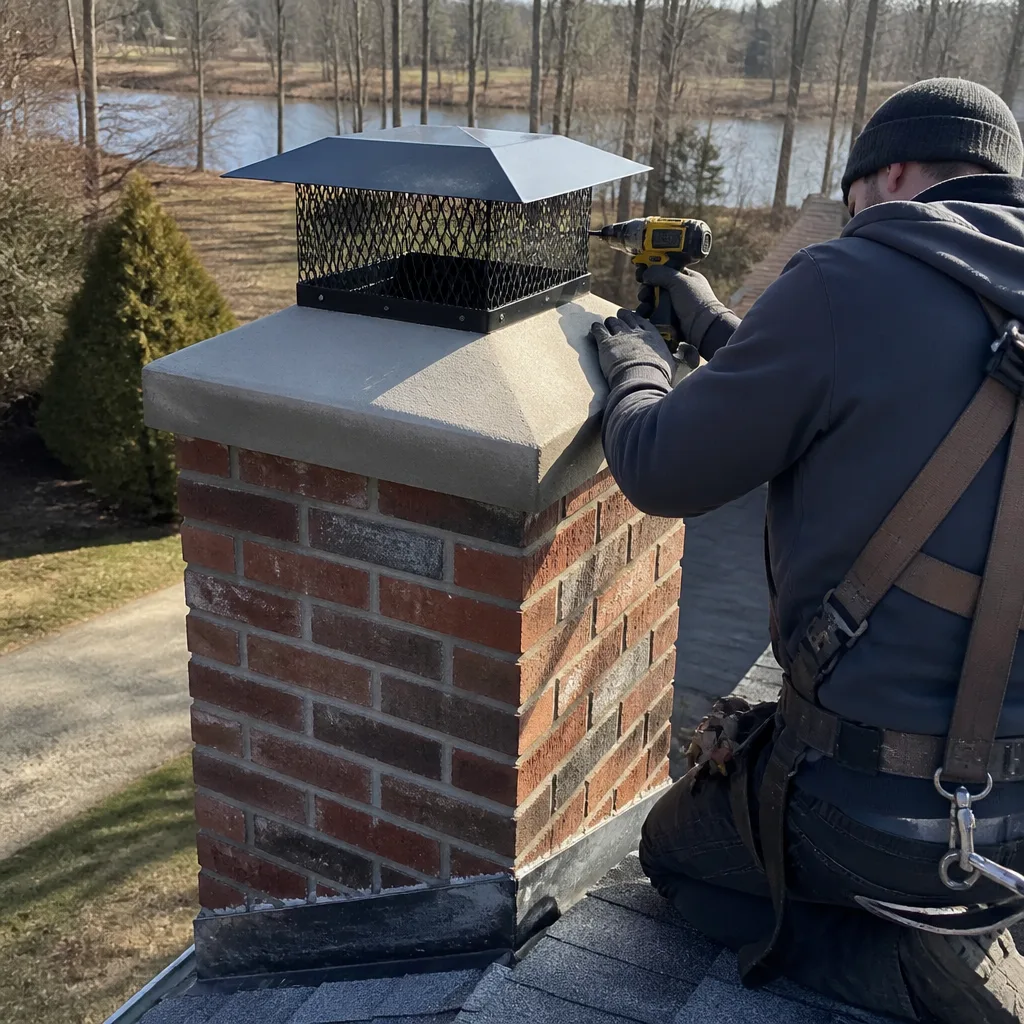 After
After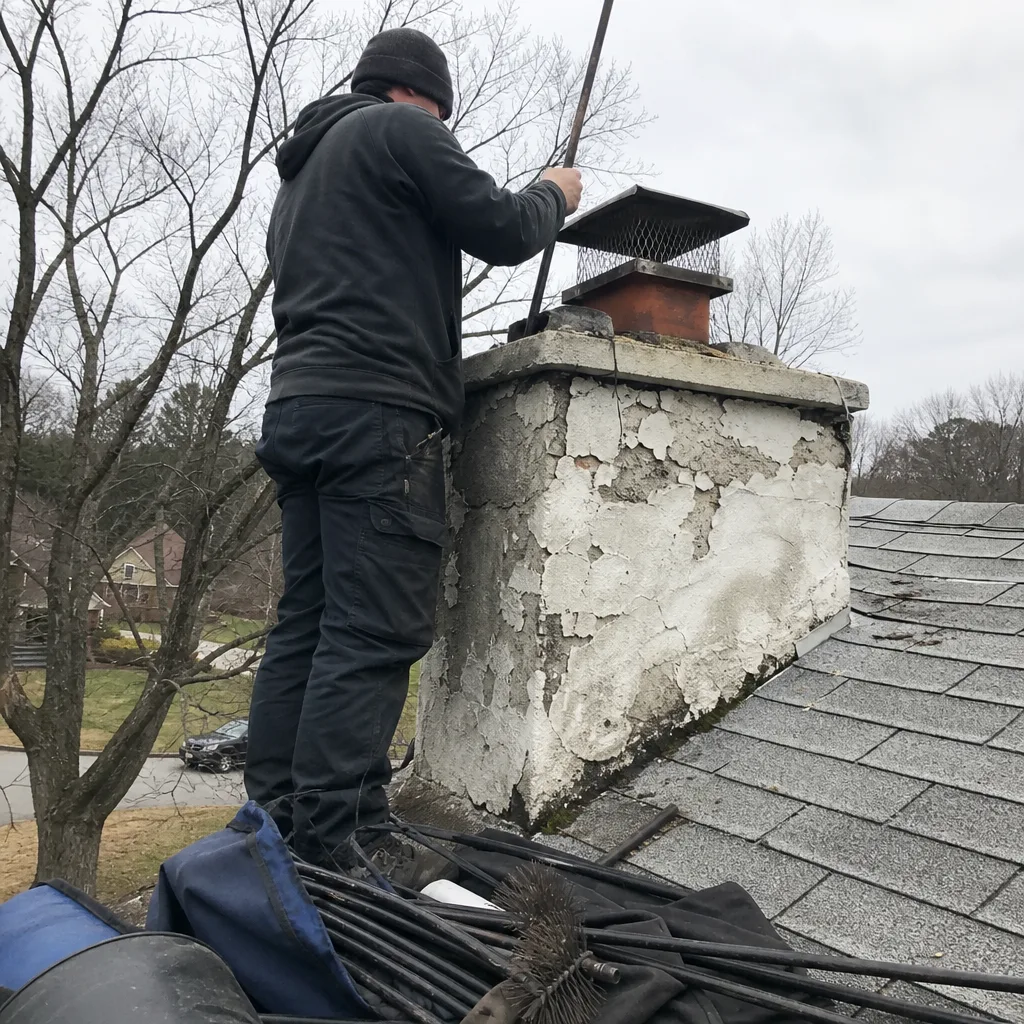 Before
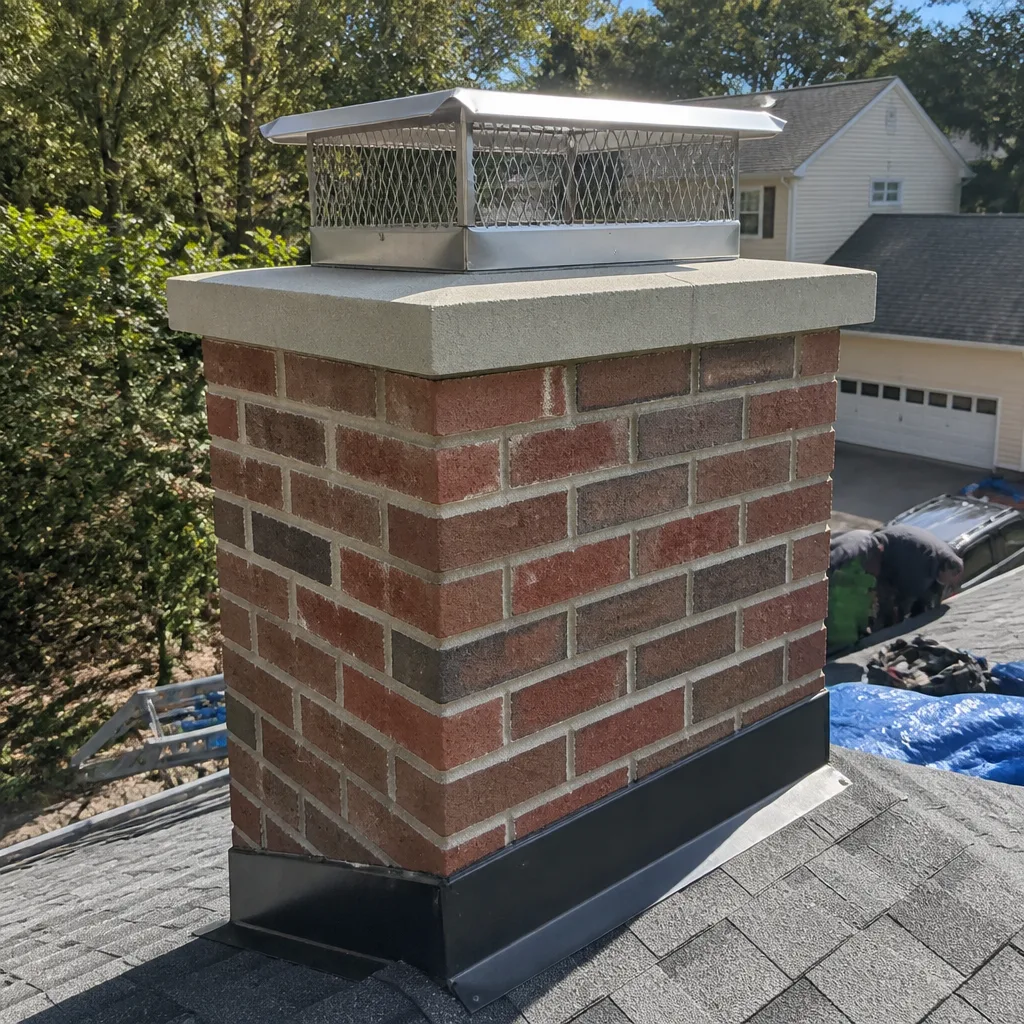 After
AfterHow to Hire a Chimney Cleaning Contractor in Waterford: A Step-by-Step Guide
Connecticut has no state licensing requirement specifically for chimney sweeps. That single fact explains most of the horror stories we hear from homeowners in Waterford and the surrounding towns. A guy shows up with a brush, says your flue is full of stage-three creosote, quotes $2,400 for a liner you may not need, and drives off. There is no state board to call. No license number to verify. You are left holding an invoice and a gut feeling that something wasn’t right. This guide gives you the exact questions, the verification steps, and the paperwork checks that separate a sweep who has been doing this since 1999 from someone who bought a brush kit last month. Nothing here is theoretical. It is what we tell our own neighbors in Waterford when they ask us how to hire.
Quick Answer
Hire a chimney cleaning contractor in Waterford by verifying CSIA certification on the CSIA website, asking for a published local address and license number, requiring a written estimate before any work begins, and insisting on camera inspection footage before agreeing to any repair. Skip any company that quotes one price on the phone and another at the door, and never hire someone who knocked on your door uninvited.
Table of Contents
- Why Connecticut Leaves You on Your Own
- What CSIA Certification Actually Means (and How to Check It in 30 Seconds)
- The Bait-and-Switch Playbook: How National Booking Services Work You in Three Steps
- Five Questions to Ask Before Booking (And What Honest Answers Sound Like)
- What Matters More Than a Five-Star Review You Cannot Verify
- How to Read a Written Estimate So You Know Exactly What Is Included
- Waterford-Specific Considerations: Climate, Chimneys, and the Local Market
- Common Mistakes to Avoid
- When to Call a Professional
- Frequently Asked Questions
- The Bottom Line
Why Connecticut Leaves You on Your Own
Most trades in Connecticut require a state license. Electricians, plumbers, HVAC contractors, even home improvement contractors, all answer to a licensing board. Chimney sweeps do not. There is no Connecticut chimney sweep license. No state exam. No continuing education requirement. Nothing. That means anyone can print business cards that say “chimney professional” and start knocking on doors in Waterford this afternoon.
The only meaningful credential in this trade is certification from the Chimney Safety Institute of America, known as the CSIA. It is a private certification, not a government license, but it requires actual study, testing, and ongoing education. A CSIA-certified sweep has passed written exams on fire codes, clearances, draft dynamics, and inspection procedures. They have also agreed to follow the CSIA code of ethics, which prohibits exactly the kind of scare-selling and bait-and-switch tactics that give this industry its reputation.
What this means for you, as a homeowner in Waterford: the responsibility for verifying a sweep’s qualifications falls entirely on you. No one else is doing it. Not the state, not the town, not the insurer. The good news is that verification takes less than a minute, once you know where to look. We cover that process in detail below. The bad news is that most homeowners never do it, which is precisely why the scammers keep coming back to Connecticut towns like Waterford.
What CSIA Certification Actually Means (And How to Check It in 30 Seconds)
There are two CSIA certifications a sweep can hold. The first is Certified Chimney Sweep, which covers cleaning and basic inspection. The second is Certified Chimney Professional, which adds advanced diagnostics and repair skills on top of the sweep credential. Both require passing proctored exams and completing continuing education credits every few years to maintain the credential. A sweep who has not recertified since 2015 is not current, even if the van still has the sticker.
Here is the part most companies hope you do not know: you can verify any CSIA certification on the CSIA website in about 30 seconds. Go to csia.org, click the “Find a Certified Sweep” tool, and type in the company name or the individual’s name. If the name does not come up, they are not currently certified. No sticker, no patch, no mention on their website changes that. Verification is the only thing that counts.
A trustworthy sweep will not flinch when you ask about certification. They will tell you who holds the credential, how long they have held it, and they will be glad you asked. A sweep who gets defensive, says certification “doesn’t really matter,” or changes the subject is telling you something worth hearing. In Waterford, we have been serving this community since 1999, and we would rather you check our credentials than take our word for it. Ask anyone on your street. That is how local reputation actually works.
The Bait-and-Switch Playbook: How National Booking Services Work You in Three Steps
The national booking services that advertise heavily on search engines and social media do not usually employ the person who shows up at your door. They are marketing companies that sell your appointment to a local subcontractor, often the lowest bidder. The person on the phone has never seen your chimney and never will. The person who arrives is working on thin margins and needs to make the visit profitable before he leaves your driveway. That pressure produces a predictable three-step play.
Step one: the phone quote. You call the 800 number (because there is no local number to call), and you are quoted $99 for a full chimney cleaning. Maybe $119. It sounds fair. You book the appointment. The person on the phone has sold you on a price that is below what a real cleaning costs when done properly.
Step two: the door quote. The technician arrives, walks around your chimney for ten minutes, and finds a problem. Maybe the flashing looks old. Maybe the crown has a hairline crack. Maybe he cannot see the flue well enough and “needs to run a camera.” Suddenly the $99 job is now $600 because of “required” prep work, or $1,800 because the liner “failed inspection.” None of this was mentioned on the phone, because the person on the phone had no incentive to mention it. The technician has every incentive to find it.
Step three: the camera upsell. This is the move that finances the whole model. The technician shows you grainy footage from inside your flue and points to something that “could be dangerous.” You cannot tell stage-one creosote from a cracked tile in a 3-inch video. He knows that. He is counting on it. The quote for a new liner, a rebuild, or a waterproofing job comes next, often at two or three times what a local company would charge for the same work. If you say no, he still collected the cleaning fee, and the marketing company still sold the lead. If you say yes, everyone profits except you.
None of this is illegal, which is the frustrating part. It is just structured pressure applied by people who know more than you do about a subject you are not supposed to understand. The defense is simple: get the real name of the person who will show up, verify them before they arrive, and get the price in writing before a single tool comes off the truck. At Top Hat Chimney home, the number you hear on the phone is the number on the invoice. That is not a marketing slogan. It is how we have done business in Waterford since 1999.
Five Questions to Ask Before Booking (And What Honest Answers Sound Like)
You do not need to become a chimney expert to hire one. You need to ask five questions and listen carefully to the answers. Here is what to ask, why it matters, and what a straight answer sounds like compared to a rehearsed one.
1. “Who exactly is coming to my house, and can I verify them?”
A real local company gives you names. The owner’s name, the technician’s name, and enough information to check both. A booking service gives you a four-hour window and a generic “technician.” Ask for the name of the person who will stand in your living room. Then ask if they are CSIA certified and whether they are an employee or a subcontractor. An honest answer: “Wendell will be there, he is the owner, and you can verify his CSIA certification online before he arrives.” A rehearsed answer: “All our technicians are background-checked professionals.” Notice the difference. The second answer describes a category, not a person.
2. “What is the price for a standard cleaning, and what would make it go up?”
Chimney cleaning in Waterford typically costs between $180 and $340 for a standard sweep, depending on the condition of the chimney and the type of fireplace or stove-see our Chimney Cleaning Cost Breakdown: The Waterford Homeowner’s Reference for 2026 for full details. A company that cannot give you a firm price on the phone, before sending anyone out, is a company that intends to price you at the door. Ask the follow-up: what conditions would increase the price, and by how much? A straight answer specifics: heavy glaze creosote costs more to remove, an obstructed flue takes longer, a missing cap means animals may have built a nest. A rehearsed answer hedges: “Well, it depends on what we find.” Everything depends on what you find. A professional can tell you what the most common findings are and what they cost before he ever knocks.
3. “Does the cleaning include a camera inspection, and do I get to see the footage?”
Any modern chimney cleaning should include a camera inspection as part of the service, or at minimum offer it as a clearly priced add-on. The camera footage belongs to you. You paid for it. You should be able to stand there and watch it, and you should receive stills or clips for your records. If a company tells you the camera is “for the technician’s use only,” walk away. That is the same play from the national playbook: weaponize the footage, show you only what supports the upsell, and archive the rest. The camera footage and a plain-English verdict, every time, no exceptions. That is the standard you are looking for.
4. “What happens if I am not satisfied with the work?”
Every company says they stand behind their work until you ask what that means. A real guarantee is written and specific. Ours says this: if the work is not done right, we make it right, in writing, on every single job. One call brings Wendell back at no additional cost. That is the 90-Day Done Right Promise, and it is stamped on every invoice. Ask the company you are considering what their guarantee is, in writing, and how long it lasts. If the answer is a vague “we stand behind our work” with no time frame and no document, you do not have a guarantee. You have a sentence. We also offer a free second opinion on any competing written estimate, because we would rather you compare our work honestly than pressure you into a decision.
5. “Can I see your local address and license number?”
A local company has a local address printed on the invoice, the website, and the truck. You can drive past it. You can knock on the door. A publishing address is a promise to remain reachable after the check clears. A national booking service has a P.O. box in another state and phone number that routes to a call center. Ask for the address. Ask for the license number (even though Connecticut does not require sweep licensing, a legitimate business will have a state business registration or home improvement contractor number, depending on the scope of work). If they will not give you either, you have your answer.
What Matters More Than a Five-Star Review You Cannot Verify
Online reviews have a place in hiring decisions, but they are weaker evidence than most people think. Review platforms do not verify that the reviewer actually hired the company. They do not verify the work was done. They do not verify anything. A five-star average on a platform where any person can leave a review for a business they have never used is a popularity signal, not a quality signal. Fake reviews are cheap and common. Negative reviews can be buried or removed. Relying on reviews alone is how homeowners in Waterford end up hiring a company that looks great online and falls apart in person.
Here is what counts more than a five-star average you cannot verify:
- A published name and license number. A business that puts the owner’s name and license number where anyone can see them is a business that understands accountability. Wendell puts his name on the work and runs into you again on Saturday. That is a different standard than a call center that routes complaints to a department.
- A local address you can visit. Any business can rent a website. Very few companies in the chimney trade are willing to publish a physical address where an unhappy customer can find them. A real address means the company has committed to staying in this community.
- A written warranty with a time frame. The 90-Day Done Right Promise is not a warm feeling. It is a written commitment with a specific window and a specific remedy. If the work is not right, one call brings the crew back. No fine print about “normal wear and tear.” No exclusions for things we should have caught the first time. Just a promise in writing.
- Local references you can actually call. Not just reviews. Real homeowners in your town who had the work done and will talk to you about it. Ask anyone on your street. That is how this business has always worked in Waterford and the surrounding towns. We would rather you call a neighbor than trust a star rating.
- Sweep-specific training and documented re-certification. Ask to see the certificate and the date on it. Then verify it on the CSIA website yourself.
How to Read a Written Estimate So You Know Exactly What Is Included
A written estimate is either a contract or a blank check, depending on how carefully it was written. Here is a step-by-step approach to reading one so you know what is included, what is extra, and what questions to ask before you sign.
- Look for a line-item breakdown. The estimate should list each component separately: sweeping cost, inspection cost, cap replacement cost, flashing repair cost, whatever is being proposed. A single lump-sum number with no breakdown is a red flag. It means you cannot tell what you are paying for, which means the company can change the story later.
- Check for inclusion language vs. assumption language. “Sweep and complete inspection of flue” is inclusion language. “Sweep of accessible areas” is assumption language that creates room for add-ons. If the estimate says “accessible,” ask what happens when something is not accessible. The answer should be a specific line item, not a surprise.
- Look for the guarantee clause. It should be a sentence or two, in plain English, with a time frame. “All work guaranteed for 90 days. If not done right, we return at no charge.” That is a guarantee. “We stand behind our work” is a sentence that means nothing.
- Look for who is doing the work. Is it an employee of the company you are paying, or a subcontractor? The estimate should tell you. If it does not, ask. A subcontractor working for a marketing service has a different incentive structure than a Chimney Cleaning & Sweep in Waterford crew that has been working together for years.
- Check for any “inspection findings” contingencies. Some estimates include a clause that says additional work “may be required pending inspection findings.” That is not automatically dishonest, but it needs a boundary. Ask: what are the most common findings, and what do they cost? If the company will not answer that question before the work begins, the contingency is a license to upsell.
We do no-hassle upfront pricing before a single tool comes off the truck, and the estimate you receive that day will be line-itemed so you can see exactly what each piece costs. Repairs use products from manufacturers like Gelco and Olympia Chimney, and we will tell you why we chose that product for your chimney instead of burying it in a lump-sum number.
Waterford-Specific Considerations: Climate, Chimneys, and the Local Market
Waterford sits right on Long Island Sound, and that location shapes the chimneys here in ways a sweep from another part of the state might not appreciate. The coastal air carries salt and moisture, and the freeze-thaw cycle in winter does more damage to masonry than any single event. Water gets into hairline cracks in the crown, freezes, expands, and turns a hairline crack into a structural problem over three or four winters. Crowns and caps in Waterford fail faster than they do inland, which is why a camera inspection here is not a luxury-our Seasonal Chimney Cleaning Care for Waterford: Year-Round Homeowner’s Guide explains what to watch each season. It is how you catch a $200 crown repair before it becomes a $2,200 rebuild.
Waterford also has a lot of older homes, and older homes have chimneys that were built under older codes. A flue that has served a 1960s colonial for sixty years may have tile liner cracks you cannot see from the fireplace opening. Tile liners crack with age, and cracked tile lets heat and gases reach the surrounding masonry. That is not a problem you diagnose by looking up the chimney with a flashlight. It takes a camera, and the footage should be shown to you before anyone quotes a liner.
The local market for chimney work is divided between the national booking services, which advertise heavily and rotate technicians through, and locally owned operations that have been around for decades. Top Hat Chimney was founded by Wendell Pike in 1999, and we have over 29 years serving local communities in and around Waterford. That matters because a local company understands the specific failure patterns in this town: salt-air crown erosion, spring chimney swifts building nests before burning season, and the creosote profiles of the hardwoods and softwoods people burn here. Your flue does not care how the fire looks. It cares how it breathes. A sweep who has been in a thousand Waterford flues knows what normal looks like in this town, and what it does not.
Common Mistakes to Avoid
- Hiring on price alone. The cheapest quote in Waterford is often the most expensive choice, because it almost always comes with a door quote and a camera upsell. A fair price for a standard cleaning is in the $180 to $340 range. Less than that and someone is financing their marketing budget with your upsell.
- Taking certification at face value. Stickers fade. Certifications lapse. Verify anything on the CSIA website before the technician steps into your house. Thirty seconds now saves you a costly mistake later.
- Agreeing to a verbal quote. If the price is not written down with a line-item breakdown, it does not exist. Get it in writing before the work begins. The number on the phone should match the number on the invoice.
- Skipping the camera footage. The camera is the only way to see what is actually happening inside your flue. Do not accept a verbal diagnosis. Watch the footage yourself. A company that will not show you the footage is hiding something or preparing to sell you something.
- Ignoring the off-season. Chimneys break in the off-season too. Spring and summer are when moisture does its worst work. Once a year, burn or no burn. Waiting until October means waiting until everyone else is calling too.
- Trusting a door knocker. The classic chimney scam in Connecticut is the uninvited door knock. A van rolls into the neighborhood, a man says he was “in the area” and noticed your chimney looks bad. Then he finds a “dangerous” condition and offers to fix it today for cash. Legitimate sweeps in Waterford are busy enough without door knocking. Never hire someone who knocks on your door uninvited.
- Assuming the insurance company will protect you. Most homeowner policies do not cover chimney repairs, and none cover cleaning. The damage caused by a deferred chimney fire may be covered, but only if you can show the chimney was maintained. Keep your sweep records. They matter more than you think.
When to Call a Professional
Call a sweep if you cannot remember the last time the chimney was cleaned. Call if you smell something sharp or acrid when the fireplace is not in use. Call if you see black, shiny buildup inside the firebox (that is glaze creosote, and first-degree creosote is a brush job; third-degree is a glaze, catch it early). Call if you hear animals in the chimney in spring, if water stains appear on the ceiling near the chimney, or if you have bought a house and cannot find any records of past maintenance. Call before you light the first fire of the season, not after. Top Hat Chimney offers free estimates in Waterford, call (860) 390-4899 and a live person will answer. It may well be Wendell himself picking up.
Frequently Asked Questions
A standard chimney cleaning in Waterford typically costs between $180 and $340, depending on the type of fireplace or stove and the condition of the flue. Heavy glaze creosote, animal nests, or a missing cap will add cost because they add labor and materials. The best way to get an exact number is to call (860) 390-4899 for a free estimate, no trip charge inside the county, and the price you hear on the phone is the number on the invoice.
Once a year, burn or no burn. The National Fire Protection Association recommends an annual inspection regardless of how often you use the fireplace, and the CSIA agrees. Even an unused chimney takes on water, hosts animals, and deteriorates over time. Annual sweeping is not about how much you burn; it is about catching problems before they become expensive or dangerous.
You need a new liner if a camera inspection shows cracks, gaps, or deterioration in the existing liner, and those defects present a clear drafting or fire-safety issue. You do not need a new liner because a technician showed you a grainy video you cannot interpret. That is why we require the camera footage and a plain-English verdict, every time, no exceptions. If the liner can safely wait, we tell you that, and we write it down.
Creosote builds up. Creosote is flammable. A thick enough layer can ignite, and a chimney fire burns hot enough to crack the liner, damage the masonry, and in the worst cases spread to the house structure. Even without a fire, a blocked or narrowed flue can push carbon monoxide back into the living space. These are not theoretical risks. They are the documented failure modes of a chimney that has not been maintained. Annual cleaning is the cheapest insurance you will ever buy against a five-figure repair.
No. Connecticut does not require a specific license for chimney sweeping. The only meaningful industry credential is CSIA certification, which you should verify on the CSIA website before hiring anyone. Legitimate local businesses will also have standard state business registrations and may carry home improvement contractor registration for repair work, but the CSIA credential is the one to ask about first.
A wood stove chimney runs hotter and builds creosote faster, especially with newer high-efficiency stoves that burn slower and cooler. Stove flues are also usually smaller, which means they clog faster. Expect to sweep a wood stove flue at least annually, and more often if you burn softwood or unseasoned wood. A fireplace flue used occasionally can sometimes go slightly longer, but the annual inspection standard still applies to both. For Waterford homeowners with wood stoves, we recommend scheduling before October so you are not waiting behind the rush. Call (860) 390-4899 for a free estimate, and ask about our senior and veteran discount, it is always 10% off.
The Bottom Line
Hiring a chimney cleaning contractor in Waterford is not about finding the lowest price. It is about finding a sweep who can be verified, who puts the price in writing before the work begins, and who shows you the camera footage instead of hiding behind it. Verify CSIA certification. Ask the five questions. Read the estimate line by line. And if the company will not give you a local address, a written guarantee, or a straight answer, keep looking. For more guides & resources on protecting your home, explore our blog. Wendell Pike founded Top Hat Chimney in 1999, and we have been serving Waterford homeowners for over 29 years with upfront pricing, camera inspections on every job, and the 90-Day Done Right Promise in writing. Call (860) 390-4899 for a free estimate, and you will talk to a live person. It may well be the owner of the company.
Written by Wendell Pike, Owner at Top Hat Chimney, serving Waterford since 1999.